Choosing between the Beyerdynamic DT 900 Pro X and the Philips SHP9500 comes down to whether you need a dedicated German studio reference transducer for exacting audio production or a light, breezy open-back headset configured for casual everyday listening.
Audio engineers, tracking musicians, and critical producers should choose the DT 900 Pro X for its surgical resolution and dependable studio construction. Home media consumers, relaxed desktop listeners, and casual players should pick the SHP9500 for its lightweight comfort and approachable acoustic balance.


Beyerdynamic DT 900 Pro X vs Philips SHP9500 at a Glance
| Feature | Beyerdynamic DT 900 Pro X | Philips SHP9500 |
|---|---|---|
| Acoustic Architecture | Open-back | Open-back |
| Driver Technology | STELLAR.45 transducer | 50 mm neodymium driver |
| Impedance | 48 ohm | 32 ohm |
| Connector Type | Mini-XLR to 3.5 mm jack | 3.5 mm gold-plated jack |
| Weight | 12.2 ounces | Not listed |
| Headband Construction | Spring steel studio structure | Steel-reinforced with double-layer cushion |
| Included In Box | Headphones, mini-XLR cable, 1/4-inch adapter, protective case | Headphones, 1.5 m detachable cable |
| Country of Origin | Made in Germany | Not listed |
| Manufacturer Warranty | 2 year manufacturer | Requested via customer service |
| Best For | Critical mixing, mastering, and editing | Casual music, long desktop sessions, media |
Driver Architecture and Acoustic Resolution
The core transducer design defines how cleanly a pair of open-back headphones reveals subtle layers in complex audio tracks. Beyerdynamic equips the DT 900 Pro X with its flagship STELLAR.45 driver, an acoustic system engineered specifically to maintain high resolution and minimal distortion even at elevated sound pressure levels. When assessing Beyerdynamic DT 900 Pro X sound quality, the driver presents fast transient responses, exposing micro-details in vocal breaths, reverb decay tails, and delicate synthesizer textures. For readers exploring premium reference hardware, evaluating how this compares against alternatives like the sennheiser hd 560s vs beyerdynamic dt 900 pro x highlights Beyerdynamic’s emphasis on clean acoustic output across varied playback gear.
Philips relies on a pair of 50mm neodymium drivers engineered to match the natural geometry of human ears. The acoustic tuning in the SHP9500 is oriented toward a wide frequency spectrum featuring crisp bass lines, a balanced midrange, and pristine high frequencies that elevate mainstream music, movies, and podcasts without sounding sterile. The 50mm diaphragms generate an engaging, warm auditory presentation, although they do not resolve tiny flaws or production artifacts with the surgical speed of the German-engineered STELLAR.45 unit.
If your workload demands catching clipping, masking issues, or phase anomalies during a critical Beyerdynamic DT 900 Pro X review analysis, the STELLAR.45 assembly is an essential technical asset. If your listening goals center on effortless entertainment without hyper-focusing on minute mix imperfections, the Philips 50mm drivers supply plenty of dynamic clarity.
Edge: Beyerdynamic DT 900 Pro X delivers superior acoustic resolution and lower harmonic distortion through its advanced STELLAR.45 transducer.
Impedance and Source Compatibility
Understanding headphone impedance dictates whether a headset can achieve full operational dynamics when plugged straight into standard consumer hardware. Comparing the DT 900 Pro X vs SHP9500 impedance reveals two distinct engineering approaches to source independence. The DT 900 Pro X is rated at 48 ohms, a deliberate design shift from older 250-ohm studio models. Beyerdynamic built this 48-ohm driver assembly to reach full listening volume from portable laptops, audio interfaces, and mobile devices without requiring a dedicated secondary headphone amplifier. Readers interested in how Beyerdynamic’s low-impedance open architecture compares against traditional closed-back workhorses can look at the beyerdynamic dt 770 pro vs 900 pro x comparison for wider context.
Philips equips the SHP9500 with an ultra-efficient 32-ohm rating. This allows the headset to pull ample dynamic energy from virtually any output terminal, including low-power tablet jacks, game console controllers, and integrated desktop soundboards. You never have to worry about weak volume ceilings or anemic bass response when connecting the SHP9500 to basic consumer equipment.
Both models succeed at freeing the user from bulky desktop amplification stacks. The SHP9500 has a slight mathematical advantage with its 32-ohm rating for ultra-low-output sources like wireless handheld controllers, but the DT 900 Pro X provides exceptional stability across modern interfaces and computers at 48 ohms.
Edge: Tie, as both headphones operate efficiently directly from consumer and professional gear without dedicated headphone amplifiers.
Soundstage Breadth and Spatial Imaging
Because both units feature open-back ear cups, sound waves move freely through the enclosures rather than bouncing off closed chambers, generating a natural, out-of-head listening experience. In an open comparison of DT 900 Pro X vs SHP9500 soundstage presentation, the two models approach spatial distribution with differing goals. Beyerdynamic engineered the DT 900 Pro X to deliver pinpoint, reliable acoustic imaging. Its wide soundstage is calibrated to tell audio producers exactly where instruments, vocal tracks, and panning effects sit across the stereo panorama, preventing skewed balance choices during audio mastering.
The Philips SHP9500 uses an open acoustic system combined with angled 50mm drivers to emphasize broad environmental separation. The listening sensation is spacious and open, providing a comfortable feeling of distance between audio elements that prevents listening fatigue during background music playback. However, its directional imaging lacks the surgical precision of the DT 900 Pro X, leaving positional boundaries somewhat softer in dense acoustic arrangements. Those evaluating wide spatial reproduction alongside other audiophile alternatives can review the beyerdynamic dt 900 pro x vs hifiman sundara to see how German dynamic drivers contrast with planar open-back designs.
For critical acoustic monitoring where directional pinpointing is mandatory, Beyerdynamic delivers reliable spatial placement. For general background listening where an airy, unconfined acoustic environment is the priority, the SHP9500 creates an enjoyable sense of space.
Edge: Beyerdynamic DT 900 Pro X provides sharper spatial localization and more precise stereo imaging across the open sound field.
Studio Mixing and Mastering Precision
Evaluating the Beyerdynamic DT 900 Pro X or Philips SHP9500 for mixing requires examining their intended acoustic application. Beyerdynamic labels the DT 900 Pro X explicitly as built for the final mix. Its frequency presentation is tailored for analytical tasks, including equalizing tracks, monitoring vocal clarity, compressing drum stems, and managing stereo width. Because it does not artificially hype low end or smooth out harsh highs, audio flaws remain clear, making it a reliable reference tool when finishing commercial tracks.
The Philips SHP9500 delivers a well-rounded tonal profile with balanced midrange and crisp highs, making it usable for basic podcast editing and track auditioning. When comparing Philips SHP9500 vs Beyerdynamic DT 900 Pro X for serious studio workloads, the SHP9500 shows its home-audio orientation. Its tuning aims to flatter recorded media rather than expose flaws, which can cause an engineer to overlook masked lower frequencies or subtle harshness during tracking sessions. Those considering entry-level alternatives often cross-reference the beyerdynamic dt 770 pro vs philips shp9500 to weigh closed studio isolation against open recreational listening.
When deciding whether the investment makes sense, asking is DT 900 Pro X worth it becomes straightforward for audio creators: its dedicated mixing balance protects your audio from translation errors on other systems. The SHP9500 serves well for recreational enjoyment, but it is not an engineered studio mastering reference.
Edge: Beyerdynamic DT 900 Pro X dominates in critical production, tracking, and final mix mastering.
Gaming Performance and Positional Audio
Gamers frequently turn to open-back headphones for wider room simulation and realistic directional cues. Choosing between the Beyerdynamic DT 900 Pro X or Philips SHP9500 for gaming depends on whether you play fast-paced tactical games or expansive atmospheric titles. The DT 900 Pro X offers distinct advantages in competitive multiplayer titles due to its low-distortion STELLAR.45 driver and precise imaging. Footsteps, reloading cues, and vertical audio changes are clearly defined, giving players rapid spatial feedback during intense matches.
The Philips SHP9500 has earned a dedicated following in the gaming community because of its spacious open acoustic system and breezy physical comfort. Its 1.5-meter detachable cable provides convenient movement around a desktop or desk setup without bunching up under a chair. Its breathable ear pads ensure ears stay cool during marathon play sessions, and its relaxed clamping force avoids physical pressure on the jawline during extended voice chat sessions.
If you play competitive first-person shooters where directional cues alter the outcome of a match, the DT 900 Pro X offers better positional precision. If you prefer relaxed open-world RPGs, long co-op sessions, and zero ear fatigue, the SHP9500 provides a comfortable desktop experience.
Edge: Beyerdynamic DT 900 Pro X takes the competitive edge for positional cues, while the Philips SHP9500 remains an outstanding option for fatigue-free casual gaming.
Build Quality, Ergonomics, and Cable Design
Physical construction determines how a pair of headphones holds up through years of daily use. Beyerdynamic builds the DT 900 Pro X in Germany, utilizing a robust spring-steel headband core, tough modular plastics, and plush velour earpads. The package includes a protective case, a 1/4-inch screw-on adapter, and a detachable cable that terminates in a secure mini-XLR connector. At 12.2 ounces, it is solid and durable, though its studio-grade clamping force keeps it firmly planted on your head rather than floating loosely. Those weighing rugged studio models can look into the beyerdynamic dt 900 pro x vs akg k371 to examine how German frame design balances against folding travel builds.
The Philips SHP9500 uses a steel-reinforced headband wrapped in a double-layered cushion that distributes weight evenly across the crown. Its ear cushions feature a breathable fabric mesh designed to resist heat buildup over long listening stretches. Philips utilizes a standard 3.5 mm auxiliary connection with gold-plated finishing and provides a 1.5-meter cord for home listening freedom. The headband clamping force is remarkably gentle, which maximizes comfort for sensitive heads, though it will slip off if you tilt your head back quickly.
In terms of longevity, Beyerdynamic provides a 2-year manufacturer warranty and a secure locking mini-XLR connection that withstands tough studio environments. The SHP9500 relies on customer service requests for warranty support, though its simple 3.5 mm detachable cable makes replacing damaged cords fast and effortless.
Edge: Beyerdynamic DT 900 Pro X wins for professional durability, materials, and cable security, while Philips SHP9500 wins for featherweight clamping comfort.
Pros and Cons
Philips SHP9500

Pros
- STELLAR.45 driver delivering low distortion
- Dedicated open-back studio reference tuning
- Detachable mini-XLR connection cable
- Durable German manufacturing
- Protective transport case included
Cons
- Heavier frame at 12.2 ounces
- Firmer studio clamping pressure
View Philips SHP9500 on Amazon
Who Should Buy Each One
Choose the Beyerdynamic DT 900 Pro X If
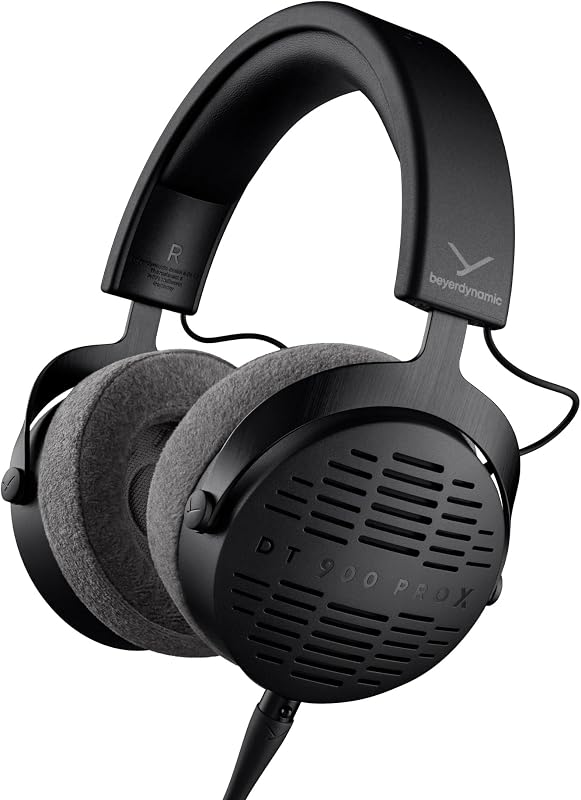
- You produce, edit, mix, or master audio tracks and need a reliable studio reference tool.
- You want a durable German-built frame with a locking mini-XLR cable connection and protective case.
- You play competitive multiplayer games that require pinpoint stereo imaging and clean transient cues.
- You need low harmonic distortion across varied playback volumes without buying an outboard headphone amp.
Choose the Philips SHP9500 If
- You want an open-back headphone for relaxed music listening, video streaming, and casual home entertainment.
- You experience head fatigue from firm clamping pressure and need light, breathable ear-cup cushions.
- You need a simple 32-ohm headset that runs easily off game controllers, tablets, and desktop motherboards.
- You want a generous 1.5-meter cord with a standard gold-plated 3.5 mm jack for everyday indoor movement.
Final Verdict
For music producers, sound designers, and critical listeners, the Beyerdynamic DT 900 Pro X is the clear choice. Its STELLAR.45 driver provides the acoustic detail and low-distortion performance required for serious mix decisions. Built in Germany with a spring-steel headband, a locking mini-XLR cable, a protective case, and a 2-year manufacturer warranty, the DT 900 Pro X is a professional studio asset engineered to deliver reliable audio translation from any workstation or mobile interface.
The Philips SHP9500 remains a standout option for everyday media consumption, casual desktop listening, and long gaming sessions. When asking is Philips SHP9500 worth it, anyone wanting an airy open-back soundstage without clamping pressure will find its 50mm neodymium drivers and double-layered headband cushions exceptionally welcoming. Choose the SHP9500 for relaxed, comfortable entertainment, and reserve the DT 900 Pro X for uncompromising studio accuracy and analytical listening.
FAQ
Can the Beyerdynamic DT 900 Pro X be driven without an external headphone amplifier?
Yes. The DT 900 Pro X features a 48-ohm impedance rating engineered explicitly to reach full listening volume directly from laptops, audio interfaces, and mobile devices without requiring dedicated external amplification.
Is the Philips SHP9500 suitable for professional audio mixing?
While the SHP9500 features balanced mids and crisp highs, its acoustic tuning is intended for home listening rather than clinical studio monitoring. It can handle basic editing, but it lacks the micro-detail resolution and flat translation of dedicated mixing reference headphones.
Which headphone provides better spatial awareness for competitive gaming?
The DT 900 Pro X provides better directional pinpointing due to its low-distortion STELLAR.45 driver and surgical imaging. The SHP9500 provides a wider, airier environment, but the DT 900 Pro X locates footsteps and audio cues with greater precision.
Does either headphone block out environmental room noise?
No. Both models use open-back acoustic designs that let sound travel freely through the ear cups. Neither model features active noise cancellation or passive noise isolation, meaning room sounds will enter and headphone audio will bleed into quiet rooms.
Are the cables detachable and replaceable on both models?
Yes. The DT 900 Pro X uses a detachable cable terminating in a 3-pin mini-XLR connection on the ear cup. The SHP9500 uses a standard detachable 1.5-meter cable with a gold-plated 3.5 mm connection on the housing.
What accessories are included in the box with the DT 900 Pro X?
The DT 900 Pro X package includes the open-back headphones, a detachable mini-XLR cable, a 1/4-inch adapter for studio equipment, and a black protective carrying case for safe storage.


