The choice between these two voice recording setups comes down to signal chain architecture: one is a dedicated analog XLR dynamic microphone that relies on an external audio interface and studio amplification, while the other is an all-in-one USB-C studio condenser featuring integrated conversion and onboard digital signal processing.
Broadcasters, vocalists, and creators who already own or plan to invest in dedicated studio hardware should choose the Shure SM7B. Independent creators, streamers, and remote podcasters seeking a streamlined desktop setup that delivers broadcast tone straight out of the box should choose the Rode NT-USB+.
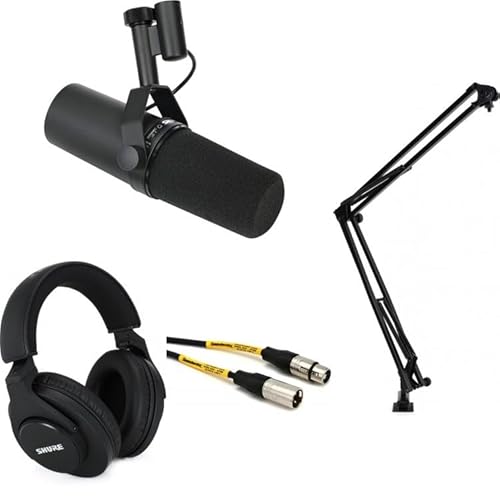
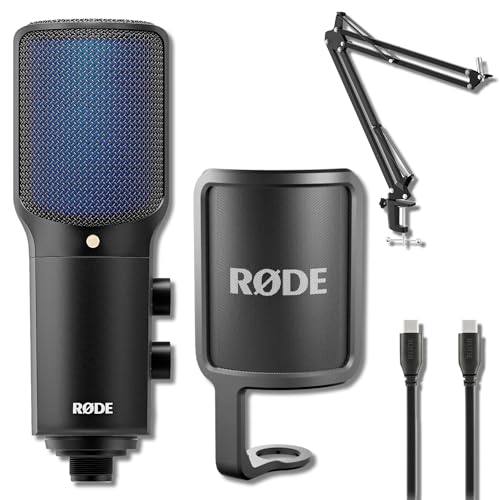
Shure SM7B vs Rode NT-USB+ at a Glance
| Feature | Shure SM7B | Rode NT-USB+ |
|---|---|---|
| Capsule Type | Large diaphragm dynamic | 1/2-inch studio condenser |
| Polar Pattern | Unidirectional | Tight cardioid |
| Connectivity | XLR | USB Type-C |
| Digital Audio Resolution | Not listed | 24-bit / 48 kHz |
| Frequency Response | Not listed | 20 Hz to 20 kHz |
| Signal-to-Noise Ratio | 75 dB | Not listed |
| Onboard Signal Processing | Two voice-tailoring hardware switches | Internal APHEX DSP |
| Integrated Preamp | Not listed | High-gain Revolution Preamp |
| Bundled Boom Arm | SH-BROADCAST1 articulating arm (32.25-inch reach) | StreamEye BOOMARM1 aluminum arm (27-inch reach) |
| Bundled Monitoring Gear | SRH440A closed-back studio headphones | Not listed |
| Best For | Treated vocal booths and modular XLR studio rigs | Plug-and-play desktop streaming, podcasting, and voiceover |
Capsule Architecture and Acoustic Pickup
Vocal clarity begins at the capsule, where transducer design determines how a microphone responds to room acoustics, plosives, and vocal nuances. The dynamic vs condenser mic for voiceover debate centers on physical sensitivity and acoustic isolation. A dynamic microphone utilizes a heavier moving coil diaphragm designed to handle powerful sound pressure levels while naturally rejecting ambient off-axis reflections. Condenser microphones use an ultralight, electrically charged backplate system that reacts instantly to subtle transients, delivering extended high-frequency response at the cost of capturing more background room noise.
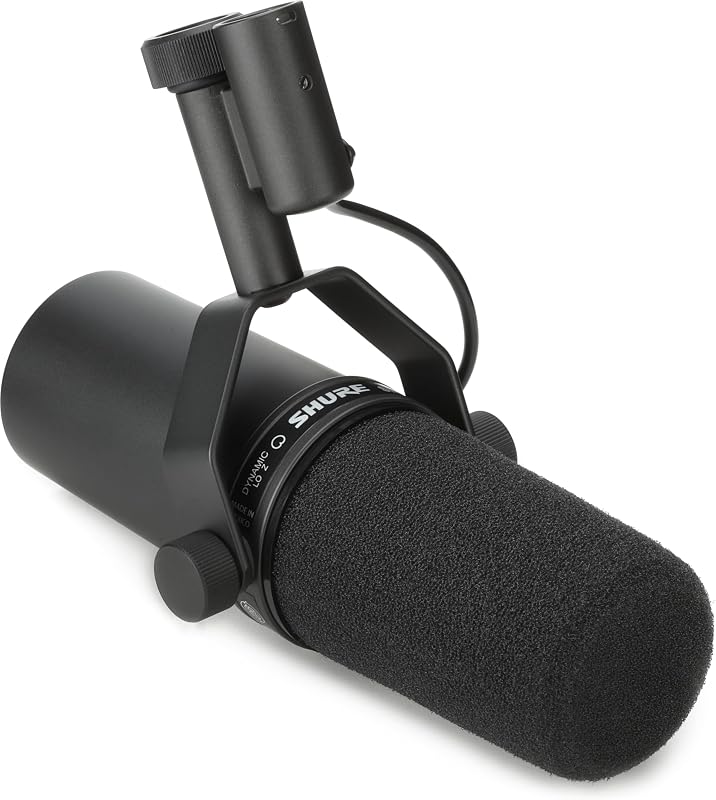
The Shure SM7B features a large diaphragm dynamic capsule engineered specifically for spoken word clarity, vocal tracking, and radio broadcast work. Its unidirectional pickup pattern narrows sensitivity directly to the front of the stainless steel enclosure, while internal design dampens room reverberation and delivers a measured 75 dB signal-to-noise ratio. In contrast, the Rode NT-USB+ uses an externally polarized 1/2-inch studio condenser capsule that captures an expansive frequency response spanning 20 Hz to 20 kHz. Similar to trade-offs found when analyzing a shure mv7 vs rode nt-usb+ matchup, the condenser capsule on the Rode brings crisp articulation and vocal breath to recordings, but its tight cardioid pattern will pick up more room echo in untreated recording spaces than the passive dynamic architecture of the Shure.
For spoken word artists working in reflective home offices without acoustic wall treatment, the heavy diaphragm of the SM7B provides natural acoustic dampening that prevents boxy room resonance from entering the track. However, creators working in quiet rooms who desire sparkling high-end presence without aggressive equalization will appreciate the airy fidelity produced by the 1/2-inch condenser capsule on the NT-USB+.
Edge: Shure SM7B provides superior acoustic isolation and ambient noise rejection for vocal recording in untreated desktop environments.
Connectivity and Hardware Setup Requirements
The connectivity interface dictates how easily a microphone integrates into an existing workstation and what supplementary gear is required before you can record. A traditional XLR connection carries a balanced analog audio voltage that must pass through an outboard audio interface or hardware mixer equipped with analog-to-digital converters. A direct USB microphone integrates the preamp, analog-to-digital conversion stages, and digital interface into the microphone body, transmitting finished digital audio through a single cable.
In the Shure SM7B XLR vs Rode USB comparison, hardware demands differ significantly. The SM7B operates purely over an analog 3-pin XLR connection. To use it with a computer, you must connect the included 10-foot Cableworks Composer Series XLR cable to a standalone audio interface or dedicated hardware recorder. Creators weighing analog studio gear frequently assess setups like the shure sm7b vs rode podmic to determine how much external hardware is practical for their space. The NT-USB+ bypasses external hardware entirely by employing a USB Type-C connector compatible with laptops, personal computers, and smartphones, converting voice signals internally at 24-bit / 48 kHz resolution.
The practical consequence of this difference is setup friction and desktop footprint. The SM7B demands an audio interface, which adds physical boxes and cabling to your workspace. The NT-USB+ provides immediate plug-and-play functionality across desktop operating systems and mobile devices, allowing mobile creators and laptop users to deploy a complete recording setup with a single cable.
Edge: Rode NT-USB+ wins on connectivity with its direct USB-C plug-and-play architecture that eliminates the need for an external audio interface.
Onboard Audio Processing and Preamp Gain
Dynamic microphones and condenser capsules present radically different gain requirements. Dynamic capsules produce lower output voltages, requiring significant clean amplification to bring speech to nominal digital recording levels without injecting electronic hiss. Condenser microphones contain active internal electronics that boost signal strength before the output stage, and modern USB models frequently pair this amplification with digital signal processors to sculpt tone before the audio hits your recording software.
The NT-USB+ features Rode NT-USB+ internal DSP driven by onboard APHEX audio processing technology. Using companion software including RØDE Connect, RØDE Central, or RØDE Reporter, users can engage a hardware-level high-pass filter, a noise gate to silence room hum, studio compression to tame volume spikes, and proprietary Aural Exciter and Big Bottom effects for broadcast weight. Backing this processing is an ultra-low-noise, high-gain Revolution Preamp that supplies clean gain directly within the chassis. As seen in modern digital comparisons like the shure mv7+ vs rode nt-usb+, running processing directly on onboard silicon relieves computer CPU load during live streams.
The SM7B takes an entirely passive, analog approach. It incorporates two physical switches on the rear plate that adjust its frequency curve, offering passive tailoring settings to customize vocal presence and low-end contouring. However, because it contains no active internal preamp or digital processing, the SM7B relies entirely on the gain capability of your external audio interface. Without a strong external preamplification stage, vocal tracks recorded with dynamic microphones can struggle with low volume levels.
Edge: Rode NT-USB+ wins for onboard processing thanks to its integrated Revolution Preamp and real-time internal APHEX digital sound shaping.
Direct Monitoring and Headphone Integration
Zero-latency monitoring is essential for voiceover artists, podcasters, and streamers who must hear their own vocal delivery in real time without distracting computer round-trip delays. When audio routes through an operating system and back to the headphones, digital buffering introduces an echo effect that disrupts natural speech patterns. Dedicated hardware monitoring paths bypass the computer loop to provide instantaneous feedback.
The NT-USB+ incorporates a built-in 3.5 mm zero-latency headphone output located directly on the microphone chassis. This output taps the analog voice signal prior to digital conversion, ensuring real-time feedback with zero latency. Furthermore, the microphone features dual rotary dials: one controls output listening volume, while the other functions as a mic-to-playback blend control. This mix dial lets creators balance their direct microphone voice against system computer audio on the fly, eliminating the need to minimize full-screen games or broadcast applications to adjust audio balance.
The SM7B package approaches monitoring through dedicated external listening gear rather than integrated microphone dials. Because the SM7B is an analog XLR microphone, headphone monitoring occurs at the external audio interface rather than on the mic body. However, this bundle includes Shure SRH440A closed-back studio headphones. Equipped with 40mm neodymium drivers, a 9.84-foot straight cable, and a gold-plated adapter, the SRH440A headphones deliver detailed acoustic isolation tailored for tracking spoken word and critical audio editing. Buyers researching flexible studio solutions often inspect pairings like the shure sm7b vs rode podmic usb when deciding whether integrated jack controls or dedicated studio headphones better suit their monitoring workflow.
Edge: Tie. The Rode NT-USB+ offers superior on-mic zero-latency mixing controls, while the Shure SM7B bundle delivers professional standalone SRH440A studio monitoring headphones.
Mounting Hardware and Desktop Ergonomics
Microphone positioning plays a vital role in vocal tone, plosive control, and physical comfort during extended recording sessions. Placing a microphone on a desktop stand exposes the capsule to mechanical desk vibrations, keyboard clatter, and poor posture. An articulating boom arm suspends the capsule close to the speaker’s mouth while freeing valuable desktop space underneath.
The SM7B bundle comes equipped with the SH-BROADCAST1 Deluxe articulating desktop mic boom stand. Engineered specifically for broadcast microphones, this stand offers a 2.17-inch desk clamp range, full 360-degree rotation, and an extensive 32.25-inch arm reach. It features an integrated cable channel to conceal the 10-foot XLR cable, preserving clean visuals for on-camera video broadcasts. The microphone itself weighs 16 ounces and is housed in a durable stainless steel enclosure that mounts smoothly to the arm with complete rotational freedom.
The NT-USB+ bundle includes the StreamEye BOOMARM1, a 27-inch desktop boom arm constructed from aluminum alloy with a secure desk clamp mount. It uses external tension springs designed for silent positional adjustments during live recording without metallic creaks. While the 27-inch reach is sufficient for standard computer desks, it provides 5.25 inches less horizontal extension than the SH-BROADCAST1 stand. Furthermore, the external spring layout lacks the enclosed internal cable routing channel found on the Shure broadcast arm.
Edge: Shure SM7B holds the edge with a longer 32.25-inch reach and an integrated cable channel that conceals wiring on camera.
Pros and Cons
Shure SM7B
Pros
- Unidirectional dynamic capsule rejects background noise
- Durable stainless steel enclosure construction
- Includes SRH440A closed-back studio headphones
- Articulating boom arm offers 32.25-inch reach
- Internal cable channel conceals wiring cleanly
Cons
- Requires external audio interface or mixer
- No integrated USB digital connectivity
Rode NT-USB+

Pros
- Direct USB-C connectivity for computers and phones
- Internal APHEX DSP with compressor and gate
- Integrated ultra-low-noise Revolution Preamp
- Zero-latency headphone jack with hardware mix dial
- 24-bit / 48 kHz digital conversion
Cons
- Condenser capsule captures more room ambiance
- Shorter 27-inch boom arm reach
Who Should Buy Each One
Choose the Shure SM7B If
- You record in an untreated room and require dynamic capsule noise rejection to block out background ambiance.
- You own or plan to purchase a dedicated XLR audio interface, mixer, or hardware voice processor.
- You want a complete studio monitoring setup that includes professional SRH440A closed-back headphones.
- You need maximum boom arm extension across a wide desk via the 32.25-inch articulating stand.
Choose the Rode NT-USB+ If
- You want a single-cable USB Type-C recording setup that connects directly to laptops, PCs, or smartphones.
- You want real-time vocal polishing like compression, high-pass filtering, and noise gating via internal APHEX DSP.
- You need immediate hardware controls on the microphone body for zero-latency monitoring volume and computer playback mix.
- You produce content across multiple locations and prefer an all-in-one system without external interface boxes.
Final Verdict
For most modern desktop creators, the Rode NT-USB+ represents the more practical, efficient choice. By combining a 1/2-inch studio condenser capsule, 24-bit / 48 kHz internal conversion, a low-noise Revolution Preamp, and onboard APHEX DSP into a compact metal chassis, it eliminates setup complexity. The inclusion of hardware blend dials and a 27-inch aluminum boom arm gives podcasters, live streamers, and voiceover artists an instant broadcast setup that plugs straight into a USB-C port without an external interface.
The Shure SM7B remains the definitive option for dedicated studio vocal tracking and professional broadcasting where acoustic isolation is critical. Its large diaphragm dynamic capsule, stainless steel construction, and 75 dB signal-to-noise ratio deliver natural spoken vocal capture that effortlessly ignores room reflections. Paired with the 32.25-inch SH-BROADCAST1 arm and SRH440A closed-back studio headphones, it forms a complete studio recording kit for creators committed to a modular XLR hardware chain. Those exploring modern hybrid gear can also review the shure mv7+ vs rode podmic usb before committing to a pure analog configuration.
FAQ
Is Rode NT-USB+ worth it for voiceover recording?
The NT-USB+ is well suited for voiceover recording due to its 1/2-inch condenser capsule, 20 Hz to 20 kHz frequency response, and 24-bit / 48 kHz digital conversion. Its onboard APHEX processing allows voiceover talent to apply high-pass filtering, gating, and compression at the hardware stage without burdening editing software.
Can the Shure SM7B connect directly to a computer without an interface?
The Shure SM7B uses a dedicated analog 3-pin XLR connector and contains no internal USB conversion. It cannot plug directly into a computer USB port; it requires an external audio interface or hardware mixer to convert its analog signal into digital audio.
Which mic is better: Shure SM7B or Rode NT-USB+ for podcasting?
For multi-host studio podcasts or untreated rooms with ambient noise, the Shure SM7B dynamic capsule provides superior acoustic isolation and rear rejection. For solo podcasters recording on a laptop who want quick setup and zero-latency monitoring, the Rode NT-USB+ offers a far simpler, all-in-one workflow.
How does the Rode NT-USB+ internal DSP compare to analog hardware?
The Rode NT-USB+ internal DSP processes vocal signals directly on onboard chips using software like RØDE Central or RØDE Connect. It applies real-time compression, noise gating, and APHEX Aural Exciter and Big Bottom effects before the audio reaches your recording software, delivering processed broadcast sound without requiring external outboard gear.
Which option performs better: Shure SM7B or Rode NT-USB+ for streaming setups?
The Rode NT-USB+ excels for desktop streaming because its direct USB Type-C connectivity, integrated Revolution Preamp, and physical mic-to-playback balance dial allow immediate volume adjustments during live broadcasts without leaving your stream. The Shure SM7B excels if your streaming desk already utilizes a dedicated hardware mixer or XLR interface.
What accessories are included with each microphone bundle?
The Shure SM7B bundle includes the microphone, an SH-BROADCAST1 articulating boom stand with 32.25-inch reach, SRH440A closed-back studio headphones, and a 10-foot Cableworks XLR cable. The Rode NT-USB+ bundle includes the USB-C condenser microphone and a StreamEye BOOMARM1 27-inch aluminum desktop boom arm.


