The deciding factor when choosing between the Rinnai RE180iN and the Rheem RTGH Series comes down to thermal efficiency architecture and simultaneous flow capacity: Rheem utilizes a high-efficiency condensing system that delivers up to 199,900 BTU/hr and 9.5 gallons per minute (GPM), while Rinnai employs a traditional non-condensing design rated at 180,000 BTU/hr and up to 8.5 GPM.
Choose the Rinnai RE180iN if you manage a moderate household seeking a reliable non-condensing gas unit with straightforward maintenance and an exceptional five-year registered labor warranty. Choose the Rheem RTGH Series if you need continuous, high-volume hot water across three to four concurrent showers alongside smart leak detection and 0.93 UEF condensing efficiency.

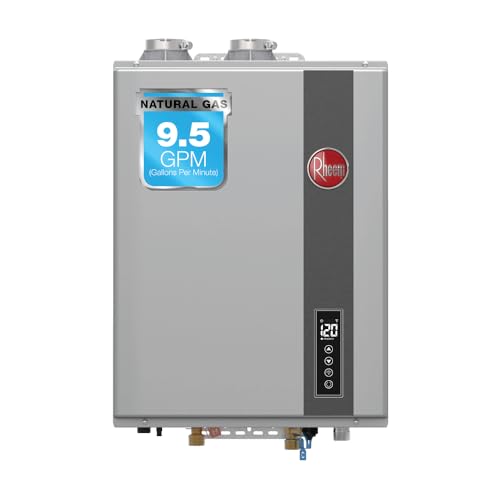
Rinnai RE180iN vs Rheem RTGH Series at a Glance
| Attribute | Rinnai RE180iN | Rheem RTGH Series |
|---|---|---|
| Combustion Design | Non-Condensing | Condensing (Ultra-Low NOx) |
| Maximum Heat Input | 180,000 BTU/hr | 199,900 BTU/hr |
| Maximum Flow Rate | 8.5 GPM (up to 6.9 GPM for 5 fixtures) | 9.5 GPM (at 35°F rise) |
| Uniform Energy Factor (UEF) | Not listed | 0.93 UEF |
| Smart Home Connectivity | Optional (Controlr module not included) | Built-in Wi-Fi (EcoNet app) |
| Leak Detection Technology | LED error alerts and service codes | LeakGuard Detection and Prevention |
| Cold-Water Sandwich Mitigation | Not listed | Hot Start Programming |
| Dimensions (W x H x D) | 14.05″ x 27.28″ x 27.28″ | 17.7″ x 23.7″ x 9.8″ |
| Unit Weight | 24.49 kg (approx. 54 lbs) | 51.3 lbs |
| Warranty Coverage | 15-yr heat exchanger, 5-yr parts, 5-yr labor (with registration) | 15-yr heat exchanger, 5-yr parts (labor not listed) |
| Best For | Moderate hot water demand with classic non-condensing venting | Large families needing concurrent showers and smart monitoring |
Heating Capacity and Maximum Flow Rate
Flow volume defines real-world tankless performance. The Rheem RTGH 9.5 GPM vs Rinnai RE180iN comparison reveals a noticeable divide in domestic hot water generation. Rheem packs a burner capable of pulling 199,900 BTU/hr, yielding up to 9.5 GPM under a 35°F ground-water temperature rise. That substantial volume guarantees full water pressure to multiple hot-water taps running at the exact same instant, even in homes with deep soaking tubs or rain-style showerheads.
By contrast, the Rinnai RE180iN flow rate operates with a top-end burner output of 180,000 BTU/hr. Rinnai specifies a maximum potential flow rate of 8.5 GPM, though its multi-fixture operational rating points to 6.9 GPM across up to five concurrent low-flow fixtures. In colder northern climates where incoming municipal water drops below 50°F, that 19,900 BTU difference becomes critical. RE180iN must throttle its water flow more aggressively than RTGH Series to lift incoming ground water to the target 120°F to 140°F range.
For homes with moderate usage, 180,000 BTU provides ample heating capacity without straining gas supply lines. However, when multiple appliances draw water simultaneously, the RTGH Series maintains stable flow rates and target temperatures across a wider operating envelope than RE180iN can deliver.
Edge: Rheem RTGH Series because its 199,900 BTU/hr burner delivers an impressive 9.5 GPM throughput that outperforms the 180,000 BTU baseline of the competitor.
Energy Efficiency and Condensing Technology
The primary engineering divergence between these two heaters centers on Rheem RTGH condensing vs Rinnai non condensing operation. RTGH Series incorporates a secondary stainless steel heat exchanger that captures latent heat from flue exhaust gases before venting them outside. This process cools the exhaust significantly and earns the unit a 0.93 Uniform Energy Factor (UEF). The listing notes this super-high-efficiency system uses up to 34% less energy than a standard 50-gallon electric tank, drastically curbing natural gas consumption.
In contrast, RE180iN relies on a non-condensing platform. In a non-condensing system, high-temperature exhaust gases bypass secondary cooling and vent directly out of the home. While the listing does not specify the exact UEF for RE180iN, non-condensing heaters generally yield lower thermal efficiency than condensing counterparts. However, non-condensing units eliminate the need to route a dedicated acidic condensate drain line to a neutralization tank or home plumbing drain, simplifying the physical installation footprint.
Choosing between these platforms involves balancing long-term gas conservation against mechanical infrastructure. Homeowners studying the rinnai ru199in vs re180in ecosystem often note that condensing systems run cleaner with ultra-low NOx emissions compliance, which RTGH Series provides directly from the factory.
Edge: Rheem RTGH Series thanks to its advanced condensing technology and documented 0.93 UEF rating that maximizes thermal heat recovery.
Multi-Bathroom Demand and Large Household Suitability
Evaluating the Rinnai RE180iN or Rheem RTGH Series for large family living comes down to managing peak morning and evening routines. RTGH Series is rated explicitly for three to four simultaneous showers. It also integrates exclusive Hot Start Programming, an internal routine that maintains the heat exchanger in a ready state during consecutive hot water uses. This technology actively minimizes the unpleasant blast of cold water-often referred to as a cold-water sandwich-that occurs when one person hops into the shower immediately after another finishes.
RE180iN advertises the ability to run up to five fixtures at once, but this claim hinges on low-flow fixture outputs adding up to 6.9 GPM. In real-world multi-bathroom applications, running two standard showerheads alongside a dishwasher or washing machine can push RE180iN toward its 180,000 BTU thermal ceiling. While its on-demand mechanism only heats when water flows to conserve energy, the listing does not specify any buffer programming comparable to Rheem’s Hot Start system.
When multiple family members demand hot water across several bathrooms, RTGH Series provides the necessary hydraulic and thermal headroom. Exploring the broader market via a rinnai ru199in vs rheem rtgh series comparison illustrates that matching household size to burner output is vital to avoid unexpected drops in water temperature.
Edge: Rheem RTGH Series because its higher BTU capacity, four-shower envelope, and Hot Start Programming keep hot water continuous for back-to-back users.
Smart Features, Wi-Fi Connectivity, and Leak Protection
Smart connectivity and preventative safety sensors distinguish modern tankless appliances from older mechanical heaters. RTGH Series comes standard with integrated Wi-Fi technology managed through the EcoNet app. Homeowners can adjust water temperatures, monitor energy usage, and receive operational updates directly on mobile devices without purchasing external hardware. More importantly, RTGH Series features LeakGuard, an automated leak detection and prevention system that senses internal moisture to protect floors and utility areas from accidental water damage.
RE180iN incorporates an integrated LED screen that clearly displays diagnostic error codes and operational service reminders. However, smart wireless connectivity is not native to the chassis. Unlocking remote control and app capabilities requires the separate purchase of a Rinnai Controlr Wi-Fi module. While the onboard layout simplifies diagnostics for servicing technicians, homeowners seeking mobile management out of the box must plan for extra equipment.
For shoppers asking is rheem rtgh series worth it from a safety standpoint, the built-in LeakGuard module and native app integration present compelling functional value that safeguards the home interior while keeping operation transparent.
Edge: Rheem RTGH Series due to factory-integrated Wi-Fi controls and the automated LeakGuard detection and prevention system.
Dimensions, Weight, and Installation Hardware
Mounting options and utility space requirements often dictate which tankless unit fits your home. RE180iN measures 14.05 inches wide by 27.28 inches high, with a listed depth of 27.28 inches, and weighs 24.49 kg (approximately 54 pounds). Rinnai engineered this model with a cleaner internal layout and an adjustable sliding bracket specifically designed to simplify wall alignment and speed up professional placement in tight utility nooks.
RTGH Series features a wider yet significantly shallower cabinet profile, measuring 17.7 inches wide, 23.7 inches high, and only 9.8 inches deep. Weighing 51.3 pounds, RTGH Series hugs the wall closely, preventing intrusion into tight hallways, closets, or utility rooms where equipment depth poses a hazard. Rheem includes the necessary mounting hardware and direct vent compatibility right in the box, ensuring that installation crews have the core mechanical brackets on hand.
Homeowners reviewing the rheem rtgh series vs ecosmart ecos 27 dynamic frequently observe that gas unit profiles require ample clearance. If horizontal wall clearance is limited, RE180iN offers a narrower 14-inch footprint; conversely, if room depth is restricted, RTGH Series projects less than 10 inches from the mounting surface.
Edge: Tie. RE180iN is narrower with a helpful sliding alignment bracket, while RTGH Series provides a much shallower 9.8-inch depth that saves room projection.
Safety Systems and Manufacturer Warranty Coverage
Safety mechanisms and factory guarantees protect long-term equipment value. RTGH Series features an exclusive Overheat Film Wrap that surrounds the heat exchanger to immediately shut down combustion if temperatures exceed safe mechanical thresholds. It also features built-in freeze protection, CSA safety certification, and digital temperature regulation precise to within 1°F. Rheem backs RTGH Series with a 15-year warranty on the heat exchanger and a 5-year warranty on internal parts, though labor warranty details are not listed.
RE180iN provides comprehensive multi-tiered warranty terms for residential owners. Rinnai guarantees the heat exchanger for 15 years, internal parts for 5 years, and labor for a full 5 years, provided the water heater is registered on the manufacturer website within 90 days of installation. If registration is not completed within that 90-day window, the labor warranty defaults to a standard 1-year duration. Both units feature stainless steel internal components to resist corrosion over extended duty cycles.
While Rheem provides superior internal temperature shielding with its Overheat Film Wrap, Rinnai offers homeowners significant long-term peace of mind through its registered 5-year labor coverage. A detailed Rheem RTGH Series vs Rinnai RE180iN analysis shows that labor warranties can dramatically lower lifetime ownership risks during major component replacements.
Edge: Rinnai RE180iN because of its exceptional 5-year labor warranty coverage when registered within 90 days of installation.
Pros and Cons
Rinnai RE180iN
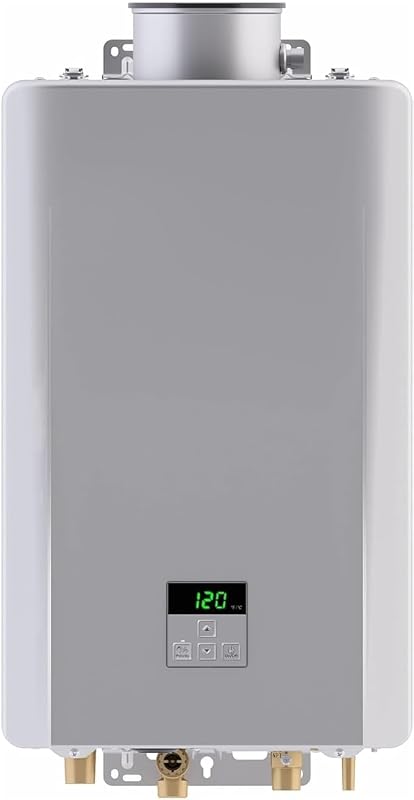
Pros
- Up to 5-year labor warranty with timely registration
- Narrow 14.05-inch suitcase-style cabinet
- Sliding mounting bracket speeds wall alignment
- Clear LED diagnostic screen and service reminders
- Straightforward non-condensing layout eliminates condensate line
Cons
- Wi-Fi connectivity requires separate Controlr module
- Lower maximum heating output at 180,000 BTU/hr
- Flow throttles to 6.9 GPM across multi-fixture use
Rheem RTGH Series
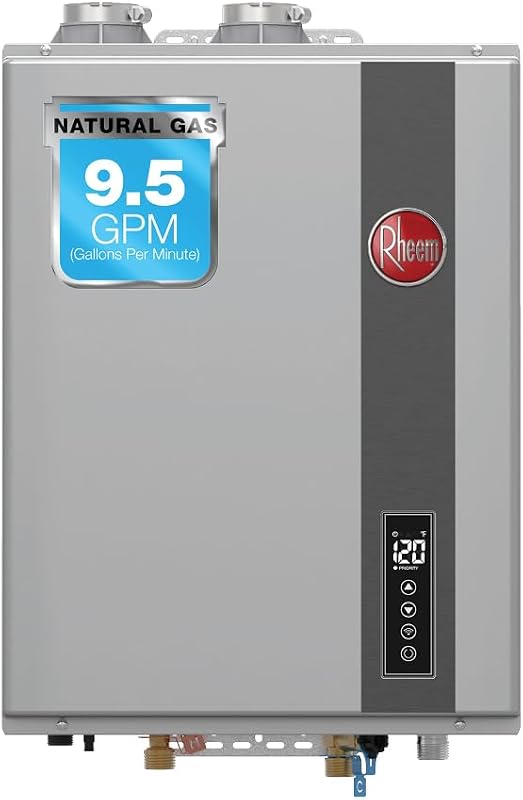
Pros
- 199,900 BTU/hr burner delivers 9.5 GPM flow
- High-efficiency condensing design with 0.93 UEF
- Supports 3-4 simultaneous showers comfortably
- Built-in Wi-Fi and LeakGuard leak prevention system
- Hot Start programming eliminates cold water bursts
Cons
- Labor warranty coverage is not listed
- Wider 17.7-inch cabinet footprint
- Condensing operation requires dedicated drainage routing
View Rheem RTGH Series on Amazon
Who Should Buy Each One
Choose the Rinnai RE180iN If
- Your household has standard hot water demands of two simultaneous fixtures and does not require high-capacity multi-shower throughput.
- You want a traditional non-condensing gas heater that eliminates the need to route and maintain a dedicated condensate drain line.
- You prioritize long-term labor warranty coverage and intend to register your product within 90 days of professional setup.
- Your mounting area has tight horizontal clearance where a narrow 14.05-inch cabinet fits best.
Choose the Rheem RTGH Series If
- You have a bustling multi-bathroom household requiring reliable, concurrent operation for three to four showers.
- You want condensing efficiency with a 0.93 UEF rating to lower your natural gas consumption and utility bills.
- You demand out-of-the-box smart home features including native Wi-Fi controls and automated LeakGuard leak prevention.
- You experience cold water bursts during back-to-back showers and need Rheem’s Hot Start Programming to smooth out transitions.
Final Verdict
For the majority of modern homes, the Rheem RTGH Series is the superior choice. Delivering 199,900 BTU/hr, a maximum flow of 9.5 GPM, and a 0.93 UEF condensing platform, it accommodates busy households running multiple showers and appliances simultaneously. The built-in Wi-Fi functionality, LeakGuard moisture protection, and Hot Start Programming provide tangible everyday conveniences that keep operation efficient and trouble-free.
The Rinnai RE180iN remains an excellent option for households with moderate hot water demands seeking a simple non-condensing installation. Its 180,000 BTU burner and 6.9 to 8.5 GPM rating handle common domestic needs reliably, while its narrow 14-inch width fits constrained wall sections. Backed by an industry-leading 5-year labor guarantee upon registration, it offers outstanding long-term security for homeowners who do not need the expansive flow volume of a condensing unit.
FAQ
Does the Rinnai RE180iN include built-in Wi-Fi?
No, RE180iN does not have built-in Wi-Fi hardware. To connect the water heater to your home wireless network for mobile management, you must purchase the optional Rinnai Controlr module separately.
Can the Rheem RTGH Series supply hot water to four showers at once?
Yes, RTGH Series is explicitly rated for three to four simultaneous showers under standard conditions, powered by its 199,900 BTU burner and high 9.5 GPM flow capacity at a 35°F temperature rise.
What happens if I forget to register my Rinnai RE180iN within 90 days?
If RE180iN is not registered on the manufacturer website within 90 days of installation, the residential labor warranty defaults from five years down to one year, while the heat exchanger (15 years) and parts (5 years) retain standard coverage.
What is the benefit of Rheem’s Hot Start Programming?
Hot Start Programming keeps the RTGH Series heat exchanger in a preheated, ready state during consecutive hot water uses, preventing cold water bursts from interrupting back-to-back showers.
Does the Rheem RTGH Series have active leak protection?
Yes, RTGH Series includes Rheem’s proprietary LeakGuard system, which detects moisture leaks and provides preventative safeguards to prevent water damage around the installation area.
What are the electrical requirements for both water heaters?
Both models require a standard 120-volt electrical supply to power their internal electronic controls, ignition systems, and display boards, with RTGH Series specifying a 132-watt power draw.


