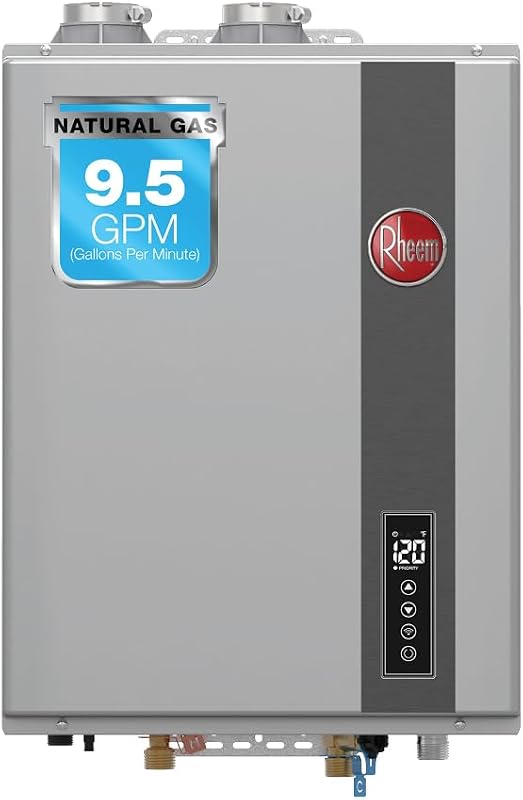
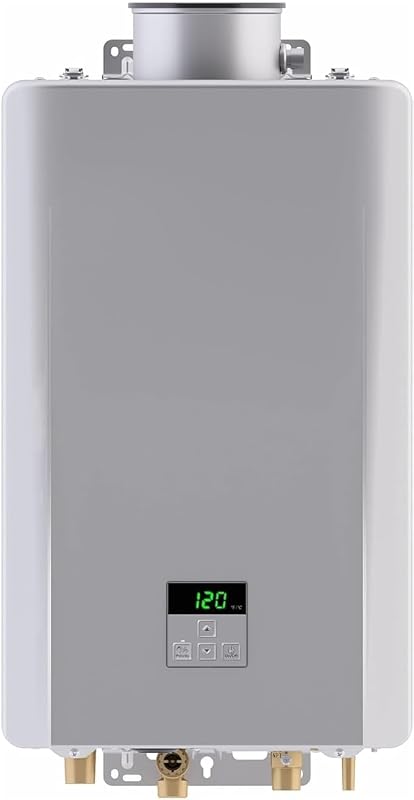
The primary factor separating the Rheem 18kW and the Rheem RTGH Series is the fundamental division between compact, ventless 240-volt electric heating and high-output natural gas condensing power. While both appliances eliminate storage tanks in favor of continuous hot water, the 18kW model is engineered for targeted point-of-use or modest single-shower applications, whereas the RTGH Series delivers high-volume flow designed to run multiple fixtures across an entire residence simultaneously.
Homeowners with existing 240-volt electrical service who need a dedicated supply for an apartment, cabin, or single-bath home should select the 18kW. Property owners with active natural gas hookups requiring whole-home capacity for concurrent showers and high-draw appliances should choose the RTGH Series.
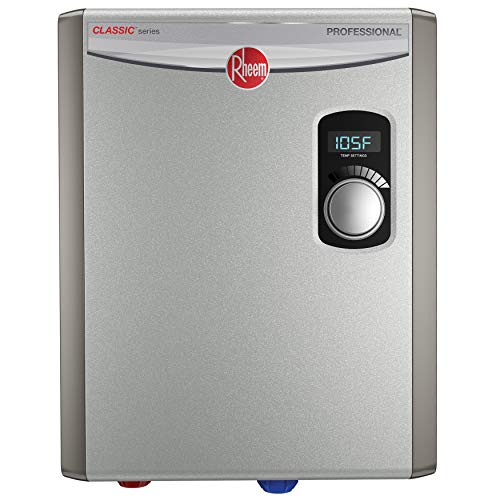
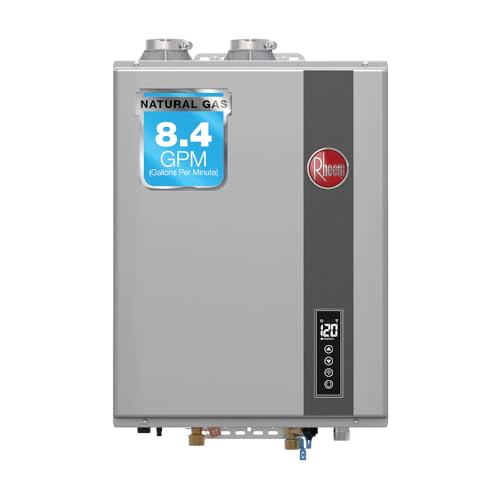
Rheem 18kW vs Rheem RTGH Series at a Glance
| Feature | Rheem 18kW | Rheem RTGH Series |
|---|---|---|
| Model Number | RTEX-18 | RTGH-84DVLN-3 |
| Fuel and Power Source | 240V AC Electric (18,000 Watts) | Natural Gas (157,000 BTU/hr) and 120V Electric |
| Maximum Flow Rate | Up to 4.4 GPM | 8.4 GPM (at 35°F rise) |
| Energy Efficiency Rating | 99.8% Efficiency | 0.93 UEF (Super High Efficiency) |
| Venting Requirements | No venting required | Indoor direct vent required |
| Heating Elements and Core | Dual copper immersion elements | Stainless steel condensing heat exchanger |
| Unit Dimensions (W x H x D) | 14.5 x 18.25 x 18.25 inches | 17.7 x 23.7 x 9.8 inches |
| Unit Weight | 14.8 pounds | 59.9 pounds |
| Temperature Range and Accuracy | Up to 140°F (+/- 1°F precision) | Up to 140°F (+/- 1°F precision) |
| Best For | Single-bath homes, apartments, and localized fixtures | Large family homes with multi-bathroom hot water demands |
Water Heating Capacity and Flow Rate
Flow capacity determines how many fixtures can run concurrently without experiencing a drop in water temperature. When evaluating the Rheem RTGH Series vs Rheem 18kW, hot water output is the sharpest operational divider. The RTGH Series operates with a burner rating of 157,000 BTU per hour to generate a maximum Rheem RTGH 8.4 GPM natural gas delivery rate at a 35-degree Fahrenheit temperature rise. This elevated output is specifically calibrated to supply three to four showers simultaneously, making it suitable for larger households where hot water draw overlaps across multiple bathrooms, dishwashers, and washing machines.
By contrast, the Rheem 18kW flow rate tops out at 4.4 GPM under optimal incoming water conditions. Because tankless electric units rely solely on electrical resistance to transfer thermal energy instantaneously, incoming groundwater temperature heavily dictates real-world volume. As noted in the manufacturer specifications, the 18kW system is rated for mid-range whole-home setups or single-shower applications in colder climates like the Midwest. When incoming water drops significantly during winter months, simultaneous fixture usage on an 18kW electric system risks lukewarm output, whereas high-output gas units maintain higher volumetric consistency under heavy draw, as explored in our rinnai re180in vs rheem rtgh series guide.
Choosing between these two models comes down to matching baseline volumetric requirements. The 18kW unit handles isolated demands such as a standalone bathroom, an accessory dwelling unit, or staggered household chores. If your home regularly experiences concurrent hot water usage across multiple fixtures, the 4.4 GPM ceiling of the electric unit will lead to flow bottlenecks that only a gas platform like the RTGH Series can comfortably avoid.
Edge: Rheem RTGH Series provides almost double the maximum flow volume, ensuring reliable simultaneous hot water for multiple fixtures.
Utility Hookups and Fuel Source Requirements
Infrastructure availability is the practical gatekeeper when deciding between the RTEX-18 vs RTGH-84DVLN-3. The 18kW model operates entirely on a 240-volt alternating current system, drawing 18,000 watts of power when heating elements engage. It does not require natural gas lines, exterior wall penetrations, condensate drains, or exhaust pipe runs. For residences without gas utility connections, opting for an electric system avoids the significant disruption and structural alterations that fuel-burning appliances demand.
The RTGH Series represents the opposite end of the Rheem tankless electric vs gas spectrum. It runs primarily on natural gas and requires a supply line capable of feeding its 157,000 BTU burner, alongside an indoor direct-vent system to safely expel combustion gases through a dedicated chimney or exterior wall penetration. While it also uses electricity, its electrical draw is modest at 132 watts and 120 volts, dedicated exclusively to power the electronic ignition, internal fans, and digital logic boards rather than the thermal transfer itself.
Installing gas infrastructure where none exists presents significant trade-offs, making the simplicity of electrical connections appealing for many homeowners. Comparing different fuel conversions, similar to our breakdown in the rheem 18kw tankless vs ecosmart ecos 27 review, shows that retrofitting an electric water heater is predominantly a breaker panel assessment, whereas installing a condensing gas unit involves gas line sizing, gas pressure checks, and compliant direct venting paths.
Edge: Rheem 18kW eliminates the need for gas supply plumbing, exhaust flues, and dedicated combustion ventilation.
Physical Footprint and Installation Versatility
Physical space constraints often dictate where a water heater can live within a home. The 18kW is remarkably compact, weighing 14.8 pounds with dimensions of 14.5 inches wide, 18.25 inches high, and an item depth of 18.25 inches. Because it burns no fuel and emits no exhaust, it does not require combustion clearance, enabling installation in tight interior quarters, recessed closets, or directly beneath a sink. A streamlined Rheem 18kW tankless installation benefits from standard bottom 3/4-inch NPT water connections that link directly to domestic plumbing lines.
Conversely, the RTGH Series is a substantial piece of machinery. Encased in a heavy-duty stainless steel cabinet, it measures 17.7 inches wide, 23.7 inches high, and 9.8 inches deep, with a total dry weight of 59.9 pounds. Mounting a 60-pound unit necessitates structural wall backing or reinforced framing. Furthermore, because it utilizes indoor direct-vent condensing technology, the unit must be located with accessible routing to an exterior wall or roof for venting pipework, as detailed in our analysis of the rinnai rxp160in vs rheem 18kw tankless options.
While the RTGH Series includes its own mounting hardware and installation manual, the complexity of gas connections, direct-vent piping, and electrical integration means professional installation is strongly recommended by the manufacturer. The 18kW model, while still demanding professional electrical work to wire its 240-volt circuit safely, offers far more versatile placement options throughout the floor plan.
Edge: Rheem 18kW holds a commanding advantage in placement flexibility due to its 14.8-pound chassis and vent-free design.
Thermal Efficiency and Continuous Temperature Delivery
Both models use advanced modulation to regulate thermal output, yet they achieve efficiency through completely different operational mechanics. In any comprehensive Rheem 18kW review, its 99.8% thermal conversion efficiency stands out as a notable spec. Electric resistance elements transfer virtually every watt of energy directly into the flowing water, using self-modulation technology to adjust power consumption dynamically based on the set target temperature and incoming water flow.
The RTGH Series relies on industry-leading condensing technology, achieving a 0.93 Uniform Energy Factor (UEF). Condensing systems extract latent heat from exhaust gases before expelling them, allowing this model to achieve Super High Efficiency status that uses up to 34% less energy than a traditional 50-gallon electric storage tank. Furthermore, any thorough Rheem RTGH Series review highlights its exclusive Hot Start Programming. This system keeps the heat exchanger in a ready state during intermittent use, effectively eliminating cold water bursts when users step into the shower shortly after another fixture was turned off.
Both units feature precise digital LED displays that let you calibrate outgoing water in single-degree increments up to 140 degrees Fahrenheit. However, maintaining steady delivery when someone turns on a second tap is handled differently. The RTGH Series absorbs fluctuating demand through its modulating 157,000 BTU burner and hot-start buffer, whereas the 18kW must quickly split its finite 18 kilowatts across both copper elements, occasionally reducing flow rate to sustain target heat levels, an operational difference similarly observed in the rheem rtgh series vs ecosmart ecos 27 matchup.
Edge: Rheem RTGH Series takes this category thanks to its 0.93 UEF condensing performance and Hot Start Programming that actively prevents cold-water sandwiches.
Safety Systems and Component Longevity
Safety mechanisms and component durability determine the long-term maintenance cycle of any on-demand system. The 18kW relies on two durable copper immersion heating elements that make direct contact with water. These elements are threaded for straightforward removal and are field-serviceable, allowing individual elements to be replaced if scale buildup or mineral deposits degrade heating performance over time. The unit is built to manage operating pressures up to 150 PSI.
The RTGH Series incorporates a more elaborate commercial-grade safety infrastructure. Constructed with stainless steel internals, the heater includes CSA safety certification, multi-point digital diagnostic monitoring, built-in freeze protection, and an electric ignition system. Most notably, Rheem equips this gas series with an exclusive Overheat Film Wrap. This wrap surrounds the heat exchanger and automatically shuts down the system if abnormal heat levels are detected, preventing damage to internal components and safeguarding the home.
Warranty coverage mirrors this difference in structural complexity. The RTGH Series listing outlines a 15-year heat exchanger warranty and a 5-year parts warranty, reflecting its heavy-duty build and engineered lifespan as a whole-house utility centerpiece. The 18kW does not list an extended heat exchanger warranty in its product data, relying instead on its modular, replaceable dual copper elements for longevity, a distinction that mirrors our findings in the rinnai ru199in vs rheem rtgh series comparison.
Edge: Rheem RTGH Series wins with its stainless steel build, built-in freeze protection, Overheat Film Wrap, and 15-year heat exchanger warranty.
Pros and Cons
Rheem 18kW

Pros
- Zero venting or exhaust ducting required
- Compact 14.8-pound chassis fits under sinks
- 8% energy-efficient electrical conversion
- Field-serviceable dual copper heating elements
Cons
- Maximum 4.4 GPM limits simultaneous fixtures
- Restricted to single shower in cold climates
- Requires dedicated 240-volt electrical circuit
Rheem RTGH Series

Pros
- High 8.4 GPM continuous flow rate
- Supports 3 to 4 simultaneous showers
- Condensing design with 0.93 UEF efficiency
- Hot Start Programming prevents cold bursts
- 15-year heat exchanger warranty coverage
Cons
- Heavier 59.9-pound direct-vent wall installation
- Requires dedicated natural gas line hookup
- Needs 120-volt power for electronic ignition
View Rheem RTGH Series on Amazon
Who Should Buy Each One
Choose the Rheem 18kW If
- Your property relies strictly on electricity and does not have access to an existing natural gas supply line.
- You need an ultra-compact water heater that can mount under a kitchen sink or fit inside a small utility closet without external venting flues.
- Your hot water consumption is concentrated on single-fixture use, such as an apartment, small cabin, or a Midwestern home with one shower.
- You want a lightweight, 14.8-pound unit featuring field-serviceable, threaded copper heating elements that can be replaced individually.
Choose the Rheem RTGH Series If
- Your home has natural gas infrastructure and demands high continuous volume to run 3 to 4 showers simultaneously.
- You want high-efficiency condensing gas performance that cuts operational energy use compared to standard 50-gallon storage tanks.
- You despise cold-water bursts during back-to-back bathroom use and want dedicated Hot Start Programming to keep the unit primed.
- You prioritize long-term equipment protection, including a 15-year heat exchanger warranty, freeze protection, and an Overheat Film Wrap.
Final Verdict
When asking whether to choose the Rheem 18kW or Rheem RTGH Series for whole house water demands, the final decision rests on household fixture count and fuel infrastructure. The 18kW model is an outstanding electric solution for low-to-medium demand applications. Its 99.8% energy conversion efficiency, ventless installation, and compact 14.8-pound frame make it easy to place where gas lines cannot reach. However, its 4.4 GPM flow rate ceiling fundamentally limits its ability to serve multiple bathrooms simultaneously, especially in regions with frigid incoming groundwater.
For large households and multi-bathroom homes with access to natural gas, is Rheem RTGH Series worth it? The answer is unquestionably yes. With an 8.4 GPM maximum capacity, 157,000 BTU heating capacity, 0.93 UEF condensing efficiency, and Hot Start Programming, the RTGH Series provides the heavy-duty continuous output that modern families require. If your home has the necessary gas supply and venting access, the RTGH Series is the superior whole-home investment.
FAQ
Can the Rheem 18kW support a whole house with multiple bathrooms?
The 18kW is designed primarily for mid-range whole-home applications or single-shower usage in cold climates like the Midwest. With a maximum flow rate of 4.4 GPM, it can supply two low-flow fixtures under warm incoming water conditions, but it will struggle to support two or more simultaneous showers without a drop in outlet temperature.
What venting is required for the Rheem RTGH Series compared to the 18kW?
The RTGH Series requires a dedicated indoor direct-vent system that vents combustion exhaust gases directly to the outdoors through an exterior wall or roof penetration. The 18kW is an all-electric unit that produces no combustion byproducts, meaning it requires zero venting, flues, or exterior ducting.
How does incoming water temperature affect the Rheem 18kW flow rate?
Tankless electric heaters depend on electrical resistance elements to heat water instantly. In northern climates where groundwater temperatures drop significantly during winter, the unit must work harder to heat the water to your set temperature, which reduces the usable flow rate below its 4.4 GPM maximum to prevent temperature drops.
What is the benefit of the Hot Start Programming on the RTGH Series?
Exclusive Hot Start Programming keeps the RTGH Series in a temporary ready state during quick, back-to-back hot water draws. This prevents the brief blast of unheated water, commonly called a cold-water sandwich, that can occur when someone turns a faucet on immediately after another fixture was turned off.
Are the heating elements in the Rheem 18kW user-replaceable?
Yes. The 18kW is equipped with two durable copper immersion heating elements that are threaded and designed to be field-serviceable. This enables a technician or handy homeowner to replace an individual element if it fails or becomes encrusted with mineral deposits without replacing the entire unit.
Does the Rheem RTGH Series require electricity to operate?
Yes. Although the RTGH Series heats water using a 157,000 BTU natural gas burner, it requires a standard 120-volt electrical connection drawing 132 watts. This electrical power runs the digital LED interface, internal safety sensors, computer logic boards, and electronic ignition system.