The defining operational difference between these two mechanical hard drives lies in platter rotation speed and storage class: the Toshiba N300 8TB is a high-speed 7200 RPM drive engineered for networked and enterprise multimedia storage, whereas the Seagate BarraCuda 4TB is a 5400 RPM drive tailored for routine personal and business desktop computing.
Shoppers who need massive archival volume, enterprise-ready multimedia streaming, and peak sustained sequential transfer rates should choose the N300. Users who require an everyday desktop secondary drive for standard computing, office tasks, and moderate media storage with quiet 5400 RPM operation should choose the BarraCuda.


Seagate BarraCuda 4TB vs Toshiba N300 8TB at a Glance
| Feature | Seagate BarraCuda 4TB | Toshiba N300 8TB |
|---|---|---|
| Usable Capacity | 4 TB | 8 TB |
| Form Factor | 3.5 inches | 3.5 inches |
| Rotational Speed | 5400 RPM | 7200 RPM |
| Cache Memory | 256 MB | 512 MB |
| Interface | SATA 6.0 Gb/s | SATA 6.0 Gb/s |
| Maximum Read Speed | 190 MB/s | 281 MB/s |
| Hardware Platform | PC | Standard / Computer |
| Specific Uses | Business, Personal | Enterprise, Multimedia |
| Data Recovery Support | Data Recovery Service included | Not listed |
| Best For | General desktop storage and office workstations | High-capacity multimedia servers and heavy continuous workloads |
Rotational Speed and Sustained Throughput
Mechanical hard drive performance is primarily governed by how fast the magnetic platters rotate beneath the read/write heads. Platter speed dictates both rotational latency and how much surface data passes under the head per second. The Toshiba N300 spins at a brisk 7200 RPM, which enables sustained sequential transfer rates reaching up to 281 MB/s alongside a media speed rating of 250 MB/s. These metrics mean that large sequential file operations, such as backing up extensive disk images, streaming uncompressed video files, or running multi-gigabyte archival transfers, complete with minimal bottlenecking at the drive interface level.
By comparison, the Seagate BarraCuda operates at 5400 RPM and tops out at a maximum sustained transfer rate of 190 MB/s. When looking at seagate barracuda 4tb vs wd black hdd 6tb options, lower rotational speeds produce lower acoustic output and lower heat buildup, but the physical trade-off is clear in the raw numbers. The BarraCuda 4TB vs N300 8TB speed gap is nearly 100 MB/s during sustained read operations. While 190 MB/s is fully adequate for basic office document handling, playing stored media, and background local backups, it is noticeably slower when dumping massive libraries or synchronizing extensive creative datasets across local networks.
For workloads where drive throughput directly impacts daily system wait times, the Toshiba N300 8TB 7200 RPM vs BarraCuda 5400 RPM disparity becomes an immediate deciding factor. Moving hundreds of gigabytes across a local array or internal bus benefits noticeably from the Toshiba N300 8TB transfer rate, whereas the BarraCuda 4TB focuses on steady, moderate sequential delivery suited to general computing rigs rather than performance-oriented data shuffling.
Edge: Toshiba N300 8TB. Its 7200 RPM rotational speed and 281 MB/s sustained transfer rate outperform the BarraCuda by more than 47 percent during sequential reads.
Storage Capacity and System Density
Available capacity determines how effectively a single drive solves long-term storage requirements before an enclosure runs out of drive bays. The Toshiba N300 provides 8 TB of raw capacity inside a standard 3.5-inch form factor, delivering double the storage space found on the 4 TB BarraCuda. For builders constructing expansive home media vaults or consolidating several aging smaller drives into a single chassis, 8 TB provides substantial breathing room for vast raw video libraries, disk snapshots, and enterprise multimedia projects.
The BarraCuda provides 4 TB, an established capacity point that fulfills the needs of typical desktop users who pair a solid-state boot drive with a secondary mechanical data bank. In our analysis comparing wd red plus 8tb vs toshiba n300 8tb drives, system owners often choose 8 TB models specifically to maximize density per SATA port. Installing a single 8 TB drive consumes one power cable, one data header, and one drive bay, whereas reaching that same volume with the BarraCuda requires purchasing, mounting, and cabling two distinct 4 TB mechanical units.
When asking is Toshiba N300 8TB worth it, the answer depends entirely on how quickly your storage requirements grow over multi-year cycles. If your system houses expansive 4K project files, full machine image backups, or large local content catalogs, the 8 TB ceiling prevents early drive replacement cycles. For casual workstations where document folders, local music files, and basic archives rarely exceed a few terabytes, the 4 TB volume of the BarraCuda remains a practical baseline that avoids unneeded space.
Edge: Toshiba N300 8TB. It offers double the raw digital capacity within the identical 3.5-inch slot, maximizing hardware density and bay efficiency.
Cache Memory and Buffer Architecture
Onboard cache memory plays a critical role in smoothing mechanical drive operations by holding incoming data bursts, managing read-ahead algorithms, and buffering file allocation tables before physical head repositioning occurs. The Toshiba N300 incorporates a 512 MB cache buffer, which is unusually generous for mechanical storage. This substantial cache helps the drive juggle multiple simultaneous read and write demands, preventing momentary stutter during complex file transfers or continuous media ingestion.
The Seagate BarraCuda features a 256 MB cache, paired with Seagate’s optimized read/write caching technology. As seen in comparisons like toshiba n300 8tb vs seagate exos x18, 256 MB represents the standard industry expectation for modern 4 TB desktop-class drives. It handles everyday burst writes and standard software loading queues comfortably, allowing desktop operating systems to offload small file writes without stalling active desktop software.
However, when file queues become crowded or multiple concurrent streams request access to different platter sectors, the larger 512 MB memory pool on the N300 provides twice the overhead. The extra buffer capacity mitigates pipeline congestion, ensuring that the drive’s 7200 RPM mechanical assembly maintains its high throughput without waiting on queue clears. In any direct Toshiba N300 8TB vs Seagate BarraCuda 4TB evaluation, the 512 MB cache represents a superior hardware buffer architecture.
Edge: Toshiba N300 8TB. Its 512 MB cache buffer doubles the 256 MB allotment of the BarraCuda, giving it superior headroom for managing concurrent I/O operations.
Intended Workloads and Reliability Profile
Hard drive architecture is deeply tuned to specific operating environments, thermal envelopes, and duty cycles. The Toshiba N300 is categorized by the manufacturer for enterprise and multimedia environments, and is identified within its product family as a dedicated NAS drive. Network-attached storage drives are designed to endure continuous operating hours, manage multi-drive enclosure vibration, and handle the rigorous demands of multi-user network access across shared file directories.
The Seagate BarraCuda is engineered as a desktop-class hard drive for business and personal computing. The listing specifies desktop and PC environments, identifying it as a go-to SATA solution for music, video, photo editing, and PC gaming within standard tower enclosures. In comparisons such as seagate ironwolf 8tb vs barracuda 4tb, standard desktop drives like the BarraCuda are intended for single-drive installations operating on typical consumer duty cycles rather than around-the-clock multi-drive enterprise arrays.
Evaluating Seagate BarraCuda 4TB vs Toshiba N300 reliability requires understanding this structural divergence. For users weighing Seagate BarraCuda 4TB or Toshiba N300 8TB for NAS arrays, the N300 is the only drive between the two built for network-attached and enterprise operational standards. Conversely, when deciding between Seagate BarraCuda 4TB or Toshiba N300 8TB for gaming or a single personal workstation, the BarraCuda’s desktop tuning delivers appropriate reliability without needing multi-bay enclosure safeguards.
Edge: Toshiba N300 8TB. Built for enterprise and multimedia NAS workloads, it is structured to endure significantly more strenuous operating conditions than standard desktop drives.
Software Ecosystem and Physical Form Factor
Physical characteristics and bundled deployment utilities frequently determine how effortlessly a drive integrates into an existing system. The Seagate BarraCuda comes with free access to the Seagate DiscWizard software tool, which enables users to clone existing drives, migrate operational environments, and partition new storage volumes without third-party utilities. Furthermore, the BarraCuda listing highlights included Data Recovery Service support, offering an added layer of manufacturer-backed recovery protection against catastrophic data loss.
In terms of physical measurements, the BarraCuda 4TB listing specifies exact dimensions of 5.79 inches in length, 4 inches in width, and 0.79 inches in thickness, with a light overall weight of 14.72 ounces. These slender 3.5-inch dimensions make it remarkably easy to route around tight drive cages, low-profile brackets, and compact desktop configurations where airflow and internal clearance are limited.
The Toshiba N300 arrives as an internal bulk unit with a plastic enclosure material noted in its listing specifications. However, the listing does not specify precise physical dimensions or weight figures, nor does it list bundled cloning utilities or specialized data recovery insurance. As noted in evaluations like seagate barracuda 4tb vs wd red plus 8tb, having integrated software utilities like DiscWizard and dedicated recovery services provides practical convenience for home builders who want a quick, turnkey upgrade process without seeking external imaging tools.
Edge: Seagate BarraCuda 4TB. It includes dedicated DiscWizard migration software, factory data recovery services, and documented lightweight dimensions.
Pros and Cons
Seagate BarraCuda 4TB

Pros
- Quiet 5400 RPM rotational speed
- Free Seagate DiscWizard software included
- Manufacturer Data Recovery Service support
- Slim 0.79-inch desktop form factor
- Reliable 190 MB/s sustained transfer rate
Cons
- Half the storage capacity of N300
- Lower 190 MB/s read speed
View Seagate BarraCuda 4TB on Amazon
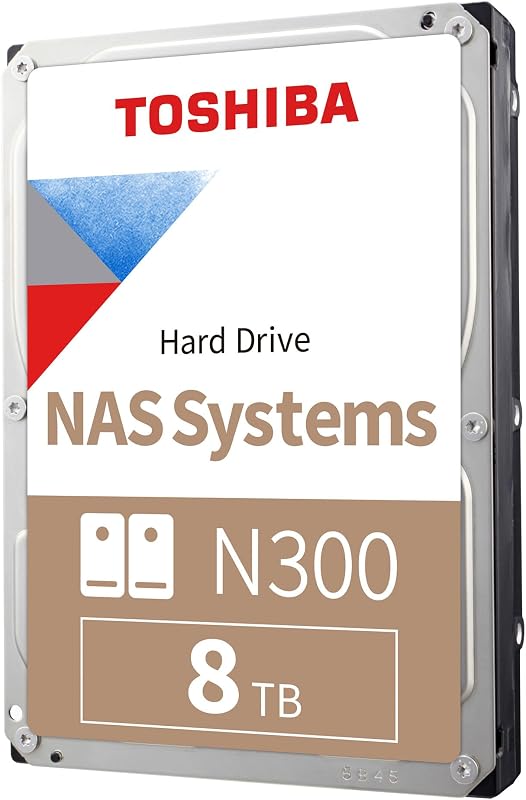
Toshiba N300 8TB
Pros
- Double the storage space at 8 TB
- Fast 7200 RPM rotational spindle
- High sustained read speed up to 281 MB/s
- Expansive 512 MB cache buffer
- Designed for enterprise and multimedia NAS
Cons
- Listing omits physical weight and dimensions
- No bundled cloning software listed
View Toshiba N300 8TB on Amazon
Who Should Buy Each One
Choose the Seagate BarraCuda 4TB If
- You need a quiet, secondary storage drive for a personal desktop PC or office computer.
- You want bundled migration utilities like Seagate DiscWizard to quickly clone an existing drive.
- You value manufacturer-backed Data Recovery Service protection for your personal files.
- Your storage needs are well within 4 TB and do not justify running a continuous high-rpm server disk.
Choose the Toshiba N300 8TB If
- You require a high-capacity 8 TB volume to maximize storage density inside a single drive bay.
- You run enterprise, multimedia, or continuous network-attached storage workloads.
- You demand faster 7200 RPM spindle speeds and sustained read transfer rates reaching up to 281 MB/s.
- Your applications benefit from an expansive 512 MB onboard cache buffer to smooth large file traffic.
Final Verdict
For most power users, media collectors, and network builders, the Toshiba N300 8TB is the superior mechanical drive. By pairing a generous 8 TB capacity with a swift 7200 RPM spindle speed, a 512 MB buffer, and sustained read speeds of up to 281 MB/s, it delivers performance numbers that standard desktop drives cannot match. Its engineering focus on enterprise and multimedia environments makes it well-equipped to serve as a robust data repository for continuous file sharing, media streaming, and expansive local archives.
However, the Seagate BarraCuda 4TB remains the smarter, more practical choice for traditional desktop PC towers and casual office environments. Operating at 5400 RPM, it delivers dependable 190 MB/s sustained throughput while remaining well-suited for single-drive personal computing tasks. Supported by the Seagate DiscWizard cloning utility, integrated Data Recovery Service features, and a slim physical profile, the BarraCuda is ideally tailored for straightforward secondary PC storage where 4 TB is plenty and server-grade enterprise features are unnecessary.
FAQ
Can the Seagate BarraCuda 4TB be used inside a 24/7 NAS enclosure?
The Seagate BarraCuda 4TB is specified by the manufacturer for personal and business desktop PC use. While it uses a standard SATA 6.0 Gb/s connection that physically fits inside network enclosures, it lacks the enterprise and NAS workload ratings found on dedicated server drives like the Toshiba N300. For around-the-clock multi-drive environments, drives engineered specifically for NAS applications are recommended.
Does the 7200 RPM spindle speed make the Toshiba N300 8TB faster than the BarraCuda 4TB?
Yes. The 7200 RPM rotational speed of the Toshiba N300 allows data on the platters to pass under the read heads at a faster rate than the 5400 RPM BarraCuda. This translates directly to hardware throughput, giving the N300 a maximum read speed of 281 MB/s compared to the BarraCuda’s 190 MB/s sustained ceiling.
Which drive is better suited for a dedicated gaming desktop?
Both drives operate on SATA 6.0 Gb/s connections and function well as bulk storage for game libraries. The BarraCuda is specifically highlighted for building gaming computers and general desktop setups, offering adequate 190 MB/s speeds for secondary game storage. However, the Toshiba N300 provides faster 281 MB/s sequential transfer rates and double the capacity, which shortens transfer times when moving massive game installations.
Does the Toshiba N300 8TB include data cloning software?
The product listing for the Toshiba N300 does not specify any bundled cloning or drive migration software, arriving as a standard internal bulk unit. In contrast, the Seagate BarraCuda 4TB explicitly includes access to the free Seagate DiscWizard utility to simplify data cloning and partition setup.
What is the primary difference in cache memory between these two drives?
The Toshiba N300 features a 512 MB cache buffer, whereas the Seagate BarraCuda includes a 256 MB cache. The larger 512 MB memory on the Toshiba drive provides twice the buffer room to hold incoming data, manage queued write bursts, and maintain steady data streams during high-throughput file transfers.
Does the Seagate BarraCuda 4TB include recovery services?
Yes. The Seagate BarraCuda 4TB listing specifies Data Recovery Service as an additional product feature, providing users with specialized recovery support options in the event of unexpected drive malfunctions.