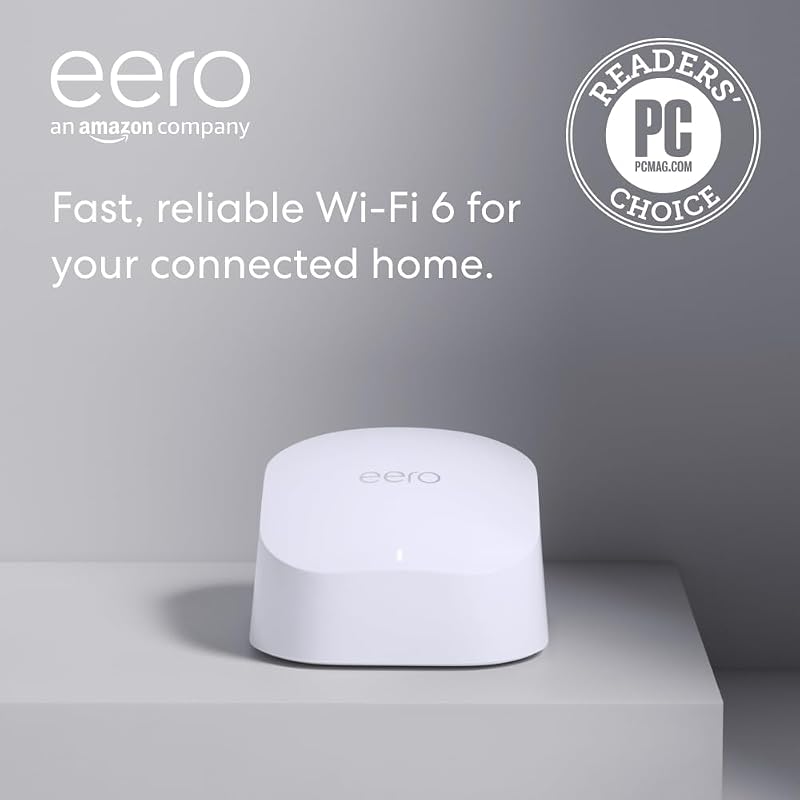
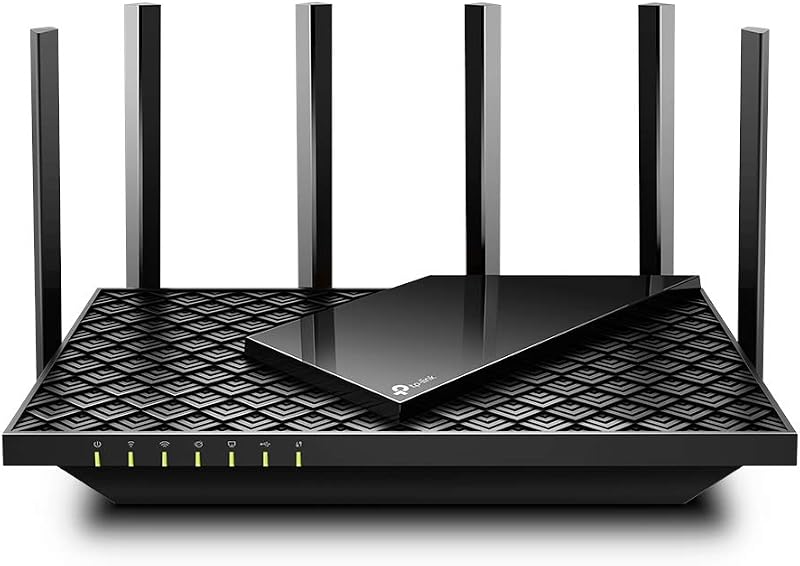
The choice between the eero Max 7 and the Netgear Orbi RBK752 comes down to cutting-edge throughput versus multi-room coverage out of the box. While one hardware package delivers multi-gigabit Wi-Fi 7 performance with 10 Gbps wired ports for modern high-speed connections, the other prioritizes a two-piece Wi-Fi 6 mesh structure engineered to blanket sprawling homes across several thousand square feet immediately.
Users demanding future-proof Wi-Fi 7 speeds, extensive device capacity, and integrated smart home radios should choose the eero Max 7. Homeowners looking to eliminate dead spots across large multistory layouts without purchasing separate satellite add-ons should select the Netgear Orbi RBK752.


Eero Max 7 vs Netgear Orbi RBK752 at a Glance
| Feature | eero Max 7 | Netgear Orbi RBK752 |
|---|---|---|
| Wi-Fi Generation | Wi-Fi 7 (IEEE 802.11be) | Wi-Fi 6 (IEEE 802.11ax) |
| Wireless Speed Rating | BE20800 (up to 4.3 Gbps wireless) | AX4200 (up to 4.2 Gbps) |
| Wired Networking Ports | Two 10 Gigabit Ethernet ports | 3 Gigabit LAN (Router), 2 Gigabit LAN (Satellite) |
| Broadband Plan Support | Up to 10 Gbps | Up to 2 Gbps |
| Included Coverage Area | Up to 2,500 sq. ft. (1-pack) | Up to 5,000 sq. ft. (2-pack) |
| Device Capacity | 250+ devices | Up to 40 devices |
| Spatial Streams | 10 spatial streams | Not listed (6 internal antennas) |
| Channel Widths | 20, 40, 80, 160, 240, 320 MHz | Not listed |
| Smart Home Radios | Thread, Matter, Zigbee, BLE 5.0 | Not listed |
| Manufacturer Warranty | 3-year limited warranty | Not listed |
| Best For | Multi-gigabit tiers and high device counts | Wide-area coverage in large homes |
Throughput Capabilities and Frequency Bands
Wireless throughput and channel management establish the baseline performance of any premium mesh architecture. The eero Max 7 introduces the Wi-Fi 7 standard (802.11be) alongside a tri-band radio layout spanning 2.4 GHz, 5 GHz, and the pristine 6 GHz spectrum. Operating under a BE20800 classification, the system leverages ultrawide 320 MHz channels, OFDMA, and 10 spatial streams configured as 2×2/4×4/4×4 MU/SU-MIMO. According to official data, it reaches wireless transfer rates up to 4.3 Gbps, delivering more than twice the speed of earlier Wi-Fi 6 systems to combat transmission delays.
In contrast, the Netgear Orbi RBK752 relies on the mature Wi-Fi 6 (802.11ax) protocol with an AX4200 rating. Its tri-band architecture generates up to 4.2 Gbps in cumulative bandwidth, utilizing standard Wi-Fi 6 channel widths and six internal antennas with high-powered amplifiers. For users reviewing an eero max 7 vs netgear orbi 970 matchup or comparing standard AX systems, the Orbi RBK752 concentrates its transmission power within the 2.4 GHz and dual 5 GHz bands rather than tapping into the 6 GHz spectrum. This design yields dependable performance across common Wi-Fi 6 clients, though it caps ultimate peak rates on modern devices.
When measuring real-world gains, the eero Max 7 vs Orbi RBK752 speed equation swings heavily toward eero for clients equipped with modern network chips. Access to 320 MHz channels on the 6 GHz band gives the eero router an immense pipeline that avoids airwave congestion entirely. While the Orbi RBK752 remains fast enough for concurrent 4K streaming and business video conferences, its Wi-Fi 6 channel ceiling limits single-client bursts compared to the expansive wireless bandwidth generated by eero.
Edge: Eero Max 7 provides substantially faster local transmission ceilings, access to clear 6 GHz spectrum, and 320 MHz channel support.
Coverage Footprint and System Architecture
Coverage capabilities determine how effectively a networking system reaches every corner of a property without encountering dropouts. The Netgear Orbi RBK752 package reviewed here consists of a primary mesh router paired with a matching satellite extender. This two-unit hardware design blankets up to 5,000 square feet out of the box, with Netgear noting that homeowners can add standalone satellites down the line to claim an extra 2,500 square feet per node. The dedicated physical units allow the system to punch through structural obstacles and distribute signals across multiple floors effectively.
The single-pack eero Max 7 is engineered as a powerful standalone node providing up to 2,500 square feet of coverage, which translates to a circular 28-foot radius. Amazon integrates proprietary TrueMesh technology, which dynamically routes packets across nodes if you expand the system. However, when deployed as a standalone unit, physical barriers such as brick, concrete, and dense plaster will naturally reduce that radial coverage. Readers evaluating an eero pro 6e vs netgear orbi rbk752 layout face an identical spatial challenge when comparing single-node footprints against multi-piece systems.
For shoppers deciding between the Eero Max 7 or Netgear Orbi RBK752 for large home environments, the Orbi kit holds an immediate advantage. Blanketing a multi-story layout requires physical access points distributed at key intervals, which the two-piece Orbi RBK752 provides right away. While an eero setup can be expanded by purchasing supplemental Max 7 nodes, the baseline Orbi package covers double the initial square footage.
Edge: Netgear Orbi RBK752 easily wins on initial coverage by providing a two-piece mesh kit covering up to 5,000 square feet.
Wired Ports and Local Backhaul Speeds
Wired connectivity dictates the maximum internet tier your hardware can process and determines whether you can configure high-speed wired backhaul runs. The eero Max 7 features two 10 Gigabit Ethernet ports that support internet subscriptions up to 10 Gbps and deliver wired transfer rates up to 9.4 Gbps. These high-speed interfaces allow power users to ingest extreme broadband tiers from fiber providers while simultaneously running a 10 Gbps wired backhaul line to an auxiliary switch, workstation, or local storage unit.
The Netgear Orbi RBK752 takes a different hardware approach, spreading Gigabit connectivity across its two chassis. The router base unit features three Gigabit Ethernet LAN ports plus its WAN connection, while the remote satellite supplies two Gigabit Ethernet LAN ports. Netgear specifies that the RBK752 accommodates internet service provider plans up to 2 Gbps and lists a maximum upstream transfer rate of 2100 Mbps. Similar to architectural decisions explored in our netgear orbi rbk752 vs 970 breakdown, standard Gigabit ports cannot unlock multi-gigabit throughput on downstream devices.
The practical contrast between these two interfaces is dramatic. If you subscribe to a multi-gigabit fiber connection exceeding 1 Gbps, the Orbi RBK752 bottlenecks individual wired clients at 1 Gbps per port. The eero Max 7 eliminates that limitation entirely by providing full multi-gigabit transmission pipelines. For consumers assembling a high-speed wired backhaul or running local network backups, eero operates in an entirely different performance class.
Edge: Eero Max 7 dominates with dual 10 Gigabit Ethernet interfaces that handle internet tiers up to 10 Gbps.
Device Capacity and Network Management
Modern homes frequently accumulate dozens of connected devices ranging from smart appliances and tablets to security sensors and work machines. The eero Max 7 is built specifically for high-density environments, offering capacity for 250+ connected devices. Managing this dense client load is handled through 10 spatial streams, automated channel selection, band steering, and dynamic TrueMesh routing. This allows dense smart home networks to operate smoothly without dropping peripherals off the airwaves.
The Netgear Orbi RBK752 specifications list support for up to 40 connected devices across its router and satellite pairing. While 40 devices was once generous for average home use, modern households with smart lights, doorbells, cameras, streaming dongles, and laptops can reach that limit quickly. As discussed in our netgear orbi rbk752 vs tp-link deco xe75 review, crossing a manufacturer’s suggested device threshold often introduces queuing delays and periodic connection dropping.
Evaluating the Eero Max 7 vs Netgear Orbi RBK752 specs reveals that eero offers more than six times the device capacity of the Orbi kit. Users with dense smart home installations will find the 40-device ceiling on the RBK752 restrictive over time. The Max 7 processes dense client traffic far more gracefully, making it the safer choice for smart environments.
Edge: Eero Max 7 supports over 250 active connections compared to the 40-device recommendation on the Orbi RBK752.
Gaming Performance and Latency Reduction
Online gaming requires steady packet delivery and low latency rather than simple burst speeds. Choosing the Eero Max 7 or Netgear Orbi RBK752 for gaming involves balancing local proximity against network processing overhead. The eero Max 7 integrates Wi-Fi 7 optimizations explicitly intended for cloud gaming, AR, and VR applications. Its 320 MHz channels and multi-gigabit backhaul pathways work together to lower packet jitter, while TrueMesh dynamically routes data around environmental interference.
The Netgear Orbi RBK752 maintains low latency across sprawling floor plans by leveraging a dedicated 5 GHz backhaul channel connecting the router and satellite. This dedicated backhaul leaves client-facing channels open for uninterrupted streaming and HD online gaming. For desktop setups located far from the main internet gateway, the satellite unit provides two Gigabit Ethernet ports, allowing console or PC players to bypass local wireless adapter latency.
Despite the convenience of Orbi’s remote satellite ports, the eero Max 7 wins the technical latency contest. Wi-Fi 7 protocol improvements inherently streamline packet scheduling and slash airtime queuing compared to Wi-Fi 6. When wired directly into one of eero’s 10 Gbps ports, gaming rigs benefit from sub-millisecond local network response times and massive headroom.
Edge: Eero Max 7 provides lower network latency and superior protocol efficiency via its Wi-Fi 7 pipeline.
Smart Home Integration and Security Ecosystems
A central home router increasingly serves as the control hub for home automation and digital security. The eero Max 7 includes built-in smart home hub radios supporting Thread, Matter, and Zigbee (functioning as a controller), alongside Bluetooth Low Energy 5.0. This allows users to enroll smart accessories directly without deploying external third-party bridge units. On the software side, eero supports WPA3-Personal transition mode, device pausing, guest networks, and optional network protection through an eero Plus subscription.
The Netgear Orbi RBK752 runs on a proprietary Linux-based operating system and focuses its feature set on enterprise-grade software security rather than smart home protocol radios. The system comes equipped with NETGEAR Armor, providing an advanced firewall shield, real-time hacker protection, and VPN privacy for connected devices with an included 30-day trial. However, the Orbi hardware does not contain dedicated Thread or Zigbee controller antennas, requiring smart device owners to retain their proprietary hubs.
Shoppers tracking the eero 6+ vs netgear orbi rbk752 progression will appreciate that eero has expanded its hardware capabilities into a complete home automation bridge. While both brands offer premium subscription-based cyber protection services, eero provides integrated smart home radios that eliminate tabletop clutter.
Edge: Eero Max 7 integrates Thread, Matter, and Zigbee smart home hardware directly into the router.
Pros and Cons
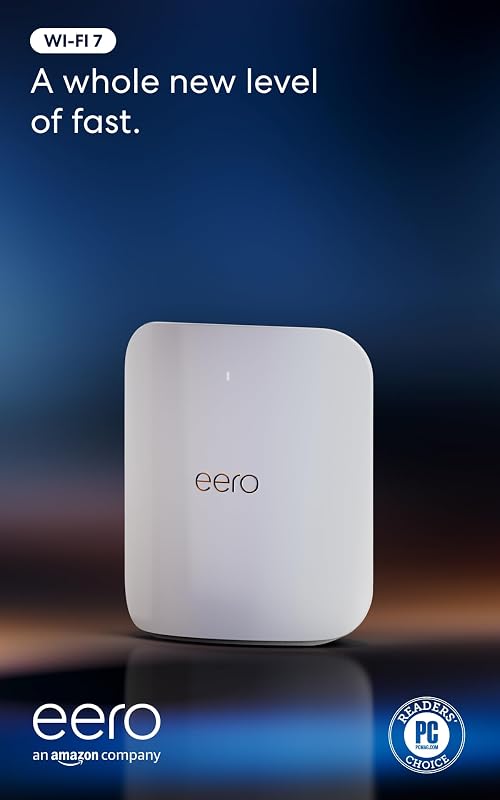
Eero Max 7
Pros
- Cutting-edge Wi-Fi 7 with 320 MHz channels
- Two 10 Gigabit Ethernet ports
- Supports over 250 connected client devices
- Integrated Thread, Matter, and Zigbee controller hub
- Three-year limited factory warranty
Cons
- Single unit covers 2,500 square feet
- Full digital security requires eero Plus subscription
Netgear Orbi RBK752
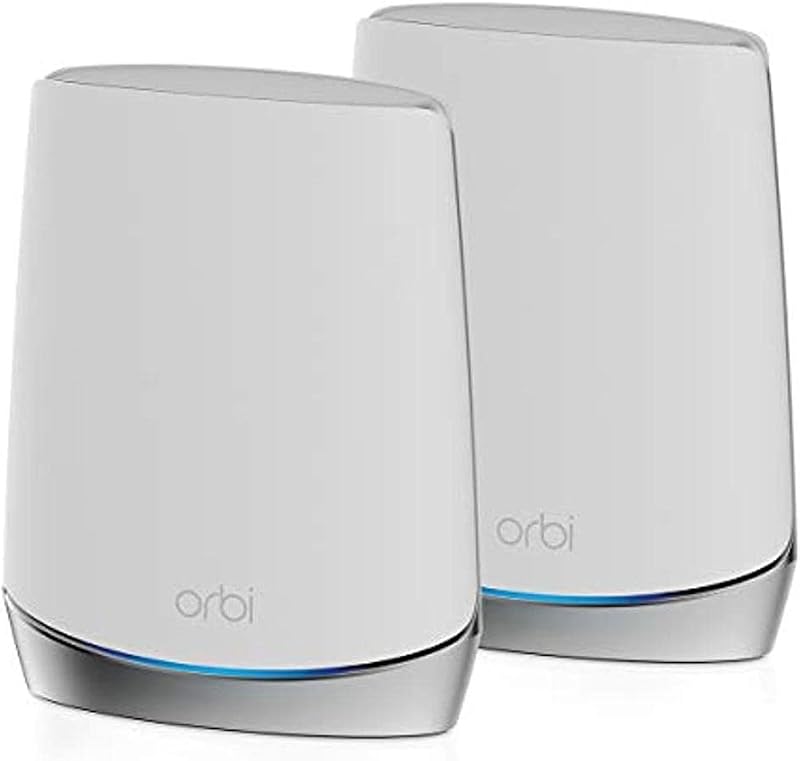
Pros
- Covers up to 5,000 square feet out of box
- Dedicated two-piece router and satellite setup
- Five total Gigabit Ethernet LAN ports included
- Compatible with internet service plans up to 2 Gbps
Cons
- Caps client capacity at 40 devices
- Lacks 6 GHz band and Wi-Fi 7 capabilities
- No built-in smart home automation controller
View Netgear Orbi RBK752 on Amazon
Who Should Buy Each One
Choose the Eero Max 7 If
- You subscribe to a multi-gigabit internet tier between 1 Gbps and 10 Gbps and want hardware that will not throttle it.
- You manage a dense connected environment containing dozens of smart home accessories, tablets, and streaming players exceeding 40 devices.
- You plan to integrate Thread, Matter, and Zigbee smart peripherals without purchasing separate external bridge hardware.
- You want a three-year manufacturer warranty and the lowest possible wireless latency for cloud gaming and VR.
Choose the Netgear Orbi RBK752 If
- You need to blanket a home up to 5,000 square feet across multiple levels immediately using a single system package.
- You want dedicated Gigabit Ethernet ports in a remote room via an included wireless satellite to wire a gaming console or desktop.
- Your home network contains fewer than 40 connected devices and relies on standard Wi-Fi 6 hardware.
- Your internet service provider speed is capped at 1 Gbps or 2 Gbps, matching the system’s Gigabit networking design.
Final Verdict
When asking is Eero Max 7 worth it, the answer depends entirely on your performance requirements. The eero Max 7 represents the future of consumer networking. By pairing bleeding-edge Wi-Fi 7 architecture with two 10 Gbps Ethernet interfaces, 320 MHz channel access, 250+ device capacity, and integrated smart home radios, it provides massive headroom for fast modern networks. It delivers unmatched throughput for high-speed fiber lines and handles client-dense homes effortlessly, earning our recommendation for any performance-focused setup.
Conversely, is Netgear Orbi RBK752 worth it for buyers seeking maximum spatial coverage? Yes, provided your home operates within moderate device limits. The Orbi RBK752 remains a solid, dependable choice for covering up to 5,000 square feet without forcing you to purchase add-on access points. If eliminating Wi-Fi dead spots in distant upstairs bedrooms on a standard Gigabit broadband plan is your primary concern, the Orbi RBK752 delivers practical coverage right out of the box.
FAQ
Does the Eero Max 7 provide backward compatibility with older Wi-Fi devices?
Yes. The eero Max 7 is backward compatible with earlier wireless standards, including 802.11a, b, g, n, ac, and ax. Older laptops, smartphones, and smart appliances will connect without compatibility issues across its 2.4 GHz and 5 GHz bands.
Can the Netgear Orbi RBK752 handle multi-gigabit internet plans?
The Netgear Orbi RBK752 listing states compatibility with internet service providers up to 2 Gbps. However, its individual LAN ports are Gigabit Ethernet, meaning wired downstream devices will be capped at 1 Gbps each.
How do the Eero Max 7 vs Netgear Orbi RBK752 specs compare for smart home automation?
The eero Max 7 features built-in smart home radios for Thread, Matter, and Zigbee, allowing it to function as a smart home controller. The Netgear Orbi RBK752 listing does not specify integrated smart home radios, meaning smart peripherals must connect via Wi-Fi or through standalone proprietary bridges.
Is the Netgear Orbi RBK752 or Eero Max 7 better for competitive gaming?
The eero Max 7 is better suited for low-latency competitive gaming due to its Wi-Fi 7 protocol improvements and two 10 Gbps ports. However, the Orbi RBK752 satellite includes two Gigabit Ethernet ports, which provides an easy way to wire a gaming console located far from the main router.
Can additional units be added to either system in the future?
Yes. Both platforms support expansion. Amazon allows you to expand the eero network dynamically using additional TrueMesh nodes, while Netgear explicitly notes that coverage can be extended by up to 2,500 square feet per additional Orbi satellite.
What digital security features do these routers offer?
The eero Max 7 supports WPA3-Personal transition mode, device pausing, and an optional eero Plus security subscription. The Netgear Orbi RBK752 includes advanced router firewall protection and a 30-day trial of NETGEAR Armor cyber security software.