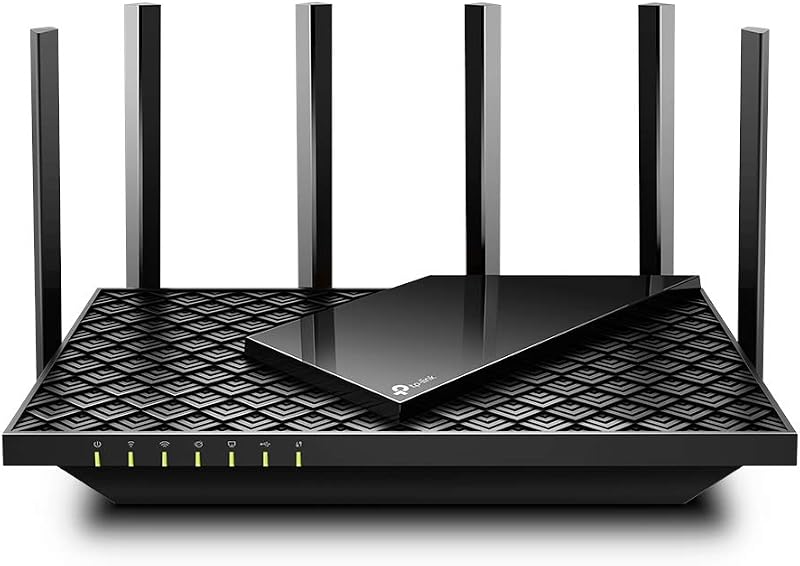
The single difference that decides the choice between the Netgear Orbi 970 and the Google Nest WiFi Pro is network capacity, splitting an uncompromising quad-band WiFi 7 system built around 10Gbps wired connectivity from an automated tri-band WiFi 6E setup engineered for everyday residential convenience.
Buyers needing maximum wireless throughput across sprawling layouts and multi-gigabit fiber connections should select the Netgear Orbi 970, while homeowners seeking a streamlined, self-managing mesh network for standard smart home connectivity should choose the Google Nest WiFi Pro.


Netgear Orbi 970 vs Google Nest WiFi Pro at a Glance
| Feature | Netgear Orbi 970 | Google Nest WiFi Pro |
|---|---|---|
| Wi-Fi Generation | WiFi 7 (802.11be) | WiFi 6E (802.11ax) |
| Frequency Bands | Quad-Band | Tri-Band (2.4 GHz, 5 GHz, 6 GHz) |
| Maximum Stated Throughput | Up to 27 Gbps | 1 Gbps transfer rate (up to 2x faster than WiFi 6) |
| Manufacturer Coverage Rating | Up to 10,000 sq. ft. | Up to 6,600 sq. ft. |
| Device Capacity | Up to 200 devices | Not listed |
| Total Wired Ports | 6 ports | 4 ports |
| Wired Port Speed | 10 Gig internet port, 10 Gbps LAN bandwidth | LAN port bandwidth >= 2.4 Gbps |
| Installed RAM | 4 GB | Not listed |
| Antenna Hardware | 3 fixed antennas | 2 internal antennas |
| Operating System | Netgear OS | Google’s Nest OS |
| Best For | Massive estates demanding multi-gigabit fiber throughput | Everyday households wanting automated tri-band stability |
Wireless Standards and Maximum Stated Throughput
Wireless standards define the ceiling of your home network speed, channel utilization, and latency behavior under heavy concurrency. In any discussion of WiFi 7 vs WiFi 6E mesh routers, generational technology plays a decisive role in real-world performance. The Netgear Orbi 970 deploys the cutting-edge 802.11be standard, delivering speeds rated up to 27Gbps. Netgear notes this capability is 2.4 times faster than standard WiFi 6. Operating as a quad-band mesh system, the Orbi 970 features an exclusive, patented Enhanced Dedicated Backhaul. This dedicated frequency lane isolates node-to-node communication, preventing satellite-to-router chatter from degrading the speed available to personal computers, mobile hardware, and streaming devices.
By contrast, the Google Nest WiFi Pro operates on the 802.11ax standard, utilizing tri-band WiFi 6E architecture across 2.4 GHz, 5 GHz, and the 6 GHz band. Google indicates the Nest system is up to two times faster than standard Wi-Fi 6 routers that support 80 MHz channels, utilizing 160 MHz channel bandwidth on client devices that support it. However, the listing specifies an overall data transfer rate of 1 Gbps. The Nest system distributes its three bands dynamically, lacking the fourth distinct physical wireless band that Netgear reserves specifically for inter-node backhaul traffic. Readers evaluating the top tier of wireless hardware often examine comparisons like the netgear orbi 970 vs tp-link deco be85 to gauge where theoretical speeds meet real-world household demands.
When comparing Orbi 970 vs Nest WiFi Pro speed potential, the disparity is immense. Netgear designs its transmission pipelines for extreme concurrent loads such as 8K media streaming, low-latency virtual reality, and intensive video conferencing occurring simultaneously across multiple household zones. The Nest WiFi Pro delivers reliable, smooth daily connectivity for standard high-definition playback and web browsing, but it cannot match the raw throughput capacity of Netgear’s 27Gbps quad-band pipeline.
Edge: Netgear Orbi 970 delivers substantially higher maximum throughput and utilizes an exclusive quad-band architecture with dedicated backhaul.
Coverage Area and Device Handling in Large Homes
Coverage specifications dictate how thoroughly a mesh network eliminates dead zones across complex multi-story construction, outdoor living areas, and basements. When debating the Netgear Orbi 970 or Google Nest WiFi Pro for large homes, physical scale dictates the winner immediately. The Orbi 970 three-pack (one router and two satellite extenders) delivers up to 10,000 square feet of whole-home coverage. Netgear equips the system with three fixed antennas configured to blanket every corner of an estate, spanning from the front entrance and backyard to the basement and rooftop. Furthermore, the Orbi 970 is explicitly rated to support up to 200 connected devices concurrently, powered by 4 GB of installed RAM to prevent routing bottlenecks.
The Google Nest WiFi Pro three-pack provides up to 6,600 square feet of coverage, with each individual router unit capable of covering up to 2,200 square feet. The hardware utilizes two internal antennas per unit and incorporates built-in signal enhancement designed to maintain a consistent connection at the outer perimeter of the coverage footprint. However, the listing does not specify an exact maximum device limit or internal memory allocation. While 6,600 square feet accommodates large residences, properties featuring detached workshops, thick structural masonry, or sprawling outdoor sections may find the limits of the Nest system sooner. Shoppers weighing coverage expanses frequently look into models like the netgear orbi 970 vs asus zenwifi xt9 for expansive multi-floor environments.
For smart homes equipped with dozens of connected light switches, security sensors, streaming boxes, and mobile gadgets, device capacity matters as much as raw square footage. The Orbi 970 prevents hardware congestion by combining substantial memory with dedicated backhaul routing. While the Nest WiFi Pro reliably blankets mid-to-large single-family residences, it lacks the massive 10,000-square-foot reach and documented 200-client buffer of its competitor.
Edge: Netgear Orbi 970 blankets significantly more square footage and provides confirmed support for up to 200 simultaneous devices.
Wired Ports and Multi-Gigabit Connectivity
Physical ports determine how effectively a mesh system interfaces with high-speed internet service providers and localized wired equipment such as network-attached storage or desktop workstations. The Netgear Orbi 970 10 Gig port configuration is engineered explicitly for multi-gigabit broadband tiers. Across the system, the hardware provides six total ports with full 10 Gbps LAN port bandwidth and a maximum upstream data transfer rate of 27 Gbps. This enables users to feed true multi-gigabit fiber into the main router and distribute that unthrottled throughput to wired switches or satellites over physical Ethernet.
The Google Nest WiFi Pro offers a more conservative physical interface. The system provides four total ports, with specifications noting a LAN port bandwidth of greater than or equal to 2.4 Gbps alongside a 1 Gbps data transfer rate. This configuration works seamlessly for standard gigabit internet connections, providing enough wired utility to link a smart home hub or a local gaming console directly to a node. However, it cannot ingest or route true 5Gbps or 10Gbps fiber broadband services. Those examining wired limits often look at head-to-head overviews such as the eero pro 6e vs netgear orbi 970 to see how port speeds influence overall network flexibility.
Deciding between the Netgear Orbi 970 or Google Nest WiFi Pro for gaming hinges heavily on these physical connections. Competitive gaming setups benefit from hardwired links that reduce latency fluctuations and packet loss. While the Nest WiFi Pro provides functional gigabit Ethernet, the Orbi 970 delivers full 10 Gbps LAN pathways, ensuring zero bottlenecks between local gaming rigs, internal servers, and modern ultra-fast modems.
Edge: Netgear Orbi 970 wins decisively with its 10 Gig internet port, 10 Gbps LAN bandwidth, and higher total port count.
Network Management and Automated Performance Optimization
Operating software establishes the user experience, determining whether a mesh system requires active hands-on administration or manages its operations silently in the background. The Google Nest WiFi Pro runs on Google’s Nest OS and emphasizes total automation. The router automatically monitors network conditions, proactively diagnoses operational faults, and can resolve routine connectivity problems on its own without user intervention. Furthermore, the Nest OS automatically adjusts network performance to prioritize sensitive traffic, ensuring video conference calls remain stable and web pages load without delay.
The Netgear Orbi 970 operates on Netgear OS, managed through a dedicated mobile application alongside physical hardware features like WPS push-button pairing. Netgear OS gives users direct control over their deployment, displaying connected hardware across the quad-band layout and managing satellite distribution. However, it focuses primarily on raw network delivery rather than autonomous, proactive traffic re-shaping. Users who prefer a hands-off experience often weigh these differences when reading a Google Nest WiFi Pro review, especially when contrasting Google’s automated software with rival systems such as the netgear orbi 970 vs tp-link deco xe75.
For buyers who want their mesh hardware to run seamlessly without managing bandwidth queues or diagnosing dropouts, Google’s Nest OS offers superior convenience. The Orbi 970 gives users robust administrative visibility via the Netgear app, but Google’s automated self-healing and proactive call prioritization provide an easier everyday management model for non-technical households.
Edge: Google Nest WiFi Pro delivers superior autonomous network optimization, proactive traffic prioritization, and self-healing diagnostics.
Security Implementations and Ecosystem Architecture
Home router security protects local networks against unauthorized intrusion, malicious software, and rogue hardware connections. The Google Nest WiFi Pro incorporates an Advanced router firewall security level. Google equips the system with secure boot protocols and automatic software updates designed to prevent unauthorized firmware execution and protect against router-level hacks. At the software level, the Nest app allows administrators to view all active clients, instantly pause access for unrecognized hardware, manage built-in parental controls, and establish an isolated guest network with a distinct password. Security authentication is anchored by WPA3.
The Netgear Orbi 970 utilizes Netgear OS with a Medium router firewall security rating and supports both WPA2 and WPA3 security protocols. Netgear implements Advanced Router Protection alongside automatic firmware updates to maintain system integrity. In addition, the listing specifies that the Orbi 970 includes a 1-year subscription to NETGEAR Armor, providing all-in-one internet security protection across connected hardware. However, once that initial promotional subscription concludes, maintaining those specific premium software defenses may require subsequent service actions. Consumers assessing ecosystem upgrades often compare modern hardware to older options, as seen when reviewing the netgear orbi rbk752 vs google nest wifi pro.
A notable architectural limitation of the Nest WiFi Pro is ecosystem backward compatibility. Google explicitly notes that because the Nest WiFi Pro utilizes Wi-Fi 6E technology, it is not backward compatible with previous generations of Google Wifi or Nest Wifi routers. In contrast, Netgear notes the Orbi 970 is fully backward compatible with older Wi-Fi client devices, though the hardware itself is rated for 240 volts and specified for use in the U.S. only. Google takes the advantage here for built-in, out-of-the-box security features like parental controls and secure boot that do not rely on renewable security subscriptions.
Edge: Google Nest WiFi Pro offers advanced firewall protection, secure boot security, and integrated parental controls without subscription dependencies.
Pros and Cons
Netgear Orbi 970
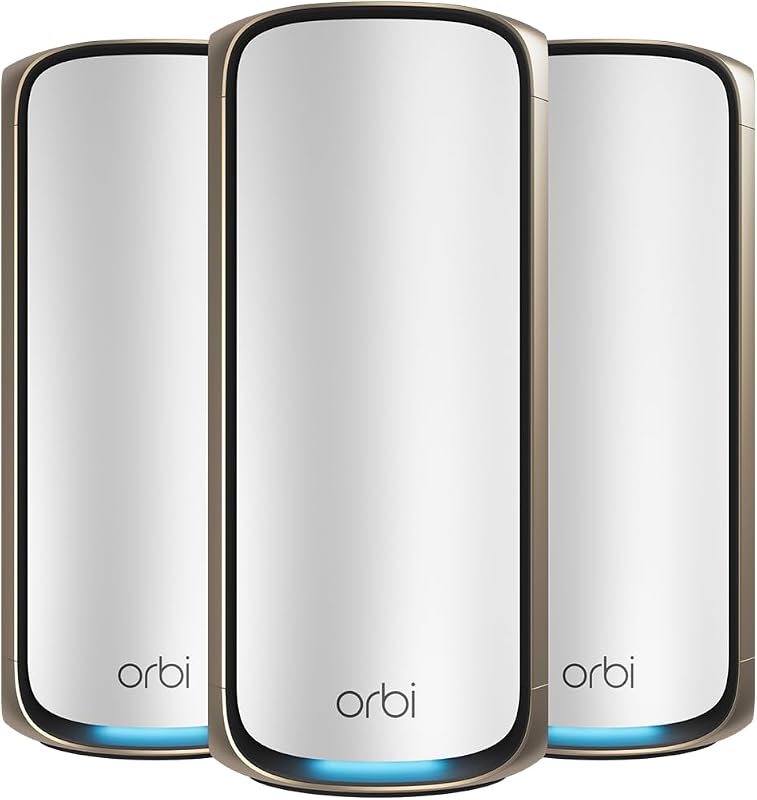
Pros
- Up to 27Gbps WiFi 7 speeds
- Covers up to 10,000 square feet
- Dedicated 10 Gig internet port
- Patented quad-band with dedicated backhaul
- Supports up to 200 connected devices
Cons
- Made for use in US only
- Requires 240 volts
- Medium router firewall security level
View Netgear Orbi 970 on Amazon
Google Nest WiFi Pro

Pros
- Tri-band WiFi 6E operation
- Automated network monitoring and self-healing
- Built-in parental controls and device pausing
- Advanced firewall and secure boot protection
Cons
- Incompatible with older Nest or Google Wifi
- Capped at 1 Gbps transfer rate
- Lower 6,600 square foot coverage rating
View Google Nest WiFi Pro on Amazon
Who Should Buy Each One
Choose the Netgear Orbi 970 If
- You have an active multi-gigabit internet plan requiring a dedicated 10 Gig internet port and 10 Gbps LAN connectivity.
- You live on an expansive property up to 10,000 square feet that needs quad-band WiFi 7 coverage from basement to backyard.
- You run a heavy smart home environment with up to 200 connected devices operating simultaneously.
- You need the raw bandwidth of 802.11be for concurrent 8K streaming, VR gaming, and massive local file transfers.
Choose the Google Nest WiFi Pro If
- Your home measures 6,600 square feet or less and functions well within standard gigabit broadband speeds.
- You prefer an automated network that self-diagnoses issues and dynamically prioritizes video calls without manual tuning.
- You want integrated parental controls, device pausing, and secure boot firewall protections out of the box.
- You are building a clean, modern tri-band WiFi 6E mesh setup using unobtrusive hardware with internal antennas.
Final Verdict
When asking is Netgear Orbi 970 worth it, the answer depends strictly on your scale and incoming broadband tier. The system represents the absolute zenith of consumer mesh hardware, offering uncompromised quad-band WiFi 7 throughput up to 27Gbps, an Enhanced Dedicated Backhaul, 4 GB of installed RAM, and expansive 10,000-square-foot coverage. If your residence is wired for multi-gigabit fiber and demands constant, high-volume data movement across up to 200 clients, this Netgear Orbi 970 review demonstrates that no standard mesh system compares to its physical 10 Gig port and wireless capabilities.
Conversely, evaluating whether the Google Nest WiFi Pro is worth it comes down to usability and practical home requirements. For standard households with sub-multi-gigabit internet plans, the Nest WiFi Pro provides an exceptionally balanced tri-band WiFi 6E environment. It covers up to 6,600 square feet, monitors its own health, and safeguards devices with an advanced firewall and secure boot architecture. While the Orbi 970 wins on pure performance and enterprise-grade hardware specifications, the Nest WiFi Pro delivers reliable, hands-off whole-home coverage for the vast majority of everyday smart homes.
FAQ
Can the Google Nest WiFi Pro connect to older Google Wifi or Nest Wifi mesh points?
No. Google explicitly states that because the Nest WiFi Pro uses advanced Wi-Fi 6E technology, it is not backward compatible with previous generations of Google Wifi or Nest Wifi mesh hardware. All nodes in your Nest WiFi Pro mesh must be Pro models.
Is the Netgear Orbi 970 backward compatible with older wireless devices?
Yes. The Netgear Orbi 970 utilizes the WiFi 7 (802.11be) standard but maintains complete backward compatibility with older WiFi generations, allowing older laptops, smartphones, and legacy 2.4 GHz smart home accessories to connect without issue.
How do the wired ports compare between the Orbi 970 and Nest WiFi Pro?
The Netgear Orbi 970 includes six total ports featuring a dedicated 10 Gig internet port and 10 Gbps LAN bandwidth. The Google Nest WiFi Pro includes four total ports, supporting a LAN port bandwidth of greater than or equal to 2.4 Gbps and a 1 Gbps data transfer rate.
What is the benefit of the Orbi 970 quad-band design over the Nest WiFi Pro tri-band?
The Nest WiFi Pro distributes traffic across three bands (2.4 GHz, 5 GHz, and 6 GHz). The Orbi 970 adds a fourth band utilizing an exclusive, patented Enhanced Dedicated Backhaul, which reserves wireless space strictly for inter-router communication so connected devices never compete with satellite traffic.
How much square footage does each mesh system cover?
The Netgear Orbi 970 three-pack covers up to 10,000 square feet, while the Google Nest WiFi Pro three-pack covers up to 6,600 square feet (or approximately 2,200 square feet per individual unit).
Does the Google Nest WiFi Pro offer parental controls?
Yes. The Google Nest WiFi Pro listing confirms built-in parental controls, guest network creation, and the ability to pause network access for specific or unknown devices directly through its app interface.
What security software comes with the Netgear Orbi 970?
The Netgear Orbi 970 includes automatic firmware updates, Advanced Router Protection, and a 1-year subscription to NETGEAR Armor all-in-one internet security protection.