The deciding difference between the DeWalt DCS573 and the DeWalt DCS391 comes down to blade diameter and motor technology: the DCS573 pairs a full-size 7-1/4-inch blade with a high-output brushless motor that delivers up to 2-9/16 inches of cutting depth, whereas the DCS391 uses a compact 6-1/2-inch blade with a traditional motor configuration yielding a 2-1/8-inch maximum cut depth.
Framing contractors, deck builders, and tradespeople tackling heavy lumber should choose the DeWalt DCS573 for its raw cutting power and deep bevel capacity. DIY homeowners, woodworkers, and punch-list carpenters should pick the DeWalt DCS391 for its lighter frame and nimble maneuverability during quick crosscuts.


DeWalt DCS573 vs DeWalt DCS391 at a Glance
| Feature | DeWalt DCS573 | DeWalt DCS391 |
|---|---|---|
| Blade Diameter | 7-1/4 in. | 6-1/2 in. |
| Motor Type | Brushless | Not listed |
| No-Load Speed | 5,500 RPM | 5,150 RPM |
| Max Cut Depth at 90° | 2-9/16 in. | 2-1/8 in. |
| Max Cut Depth at 45° | 2 in. | 1-5/8 in. |
| Bevel Capacity | Not listed | 0-50° |
| Bare Tool Weight | 8.2 lbs | 3.16 kg (approx. 7.0 lbs) |
| Electric Brake | Yes | Not listed |
| Dust Port | Yes (AirLock / 35 mm compatible) | Not listed |
| Best For | Framing, bevel cutting, and heavy construction | Light remodeling, sheet goods, and general DIY |
Cutting Depth and Blade Size
Cutting capacity dictates what materials a circular saw can handle without binding or requiring multiple passes. Standard dimensional two-by lumber measures 1-1/2 inches thick, meaning both saws clear standard framing timber at a 90-degree angle. However, the DeWalt 7 1/4 vs 6 1/2 circular saw comparison reveals a substantial divergence when angling the shoe for bevel cuts or slicing through thick engineered stock.
Looking closely at the DCS573 vs DCS391 cutting depth figures, the DCS573 provides a 2-9/16-inch depth at 90 degrees and 2 full inches of clearance at 45 degrees. That 2-inch depth at 45 degrees allows the DCS573 to sever a standard 2×4 on a steep bevel in a single stroke with half an inch of blade projection to spare. In contrast, the DCS391 delivers 2-1/8 inches at 90 degrees, but drops to 1-5/8 inches at 45 degrees. A 1-5/8-inch maximum cut depth leaves only an eighth of an inch of clearance over standard 1-1/2-inch lumber, meaning any cupped, swollen, or uneven stock can cause the blade shoe to bottom out before finishing the cut.
The DCS573 vs DCS391 blade size distinction also impacts accessory availability on the jobsite. The 7-1/4-inch blade on the DCS573 matches the universal standard for residential construction, ensuring easy access to specialized demo, finish, and framing blades. While 6-1/2-inch blades are readily available, the selection is smaller. Woodworkers exploring step-up options within the platform can examine our dewalt dcs570 vs dcs573 comparison for similar blade clearance dynamics.
Edge: DeWalt DCS573 provides significantly greater cutting depth at both 90 and 45 degrees, allowing effortless bevel cuts through dimensional framing stock.
Motor Power and FLEXVOLT Advantage
Motor engineering directly influences cutting speed, runtime, and the ability to power through dense timber without stalling. In any thorough DeWalt DCS573 review, the highlight is its brushless motor paired with FLEXVOLT Advantage technology. Spinning at 5,500 RPM, the DCS573 contains internal sensors that identify connected battery packs. When paired with a DCB606 FLEXVOLT battery, it delivers up to 77% more power compared to operating on a standard DCB205 20V MAX battery pack.
A technical DeWalt DCS391 review shows a proven motor producing 5,150 RPM (with the specification sheet also noting 5,100 RPM). The listing does not specify a brushless motor for the DCS391, indicating traditional carbon-brush architecture. Unlike its larger counterpart, the DCS391 does not feature electronic communication to draw extra wattage from high-output battery packs, delivering a consistent power baseline across any standard 20V MAX battery.
In practical cutting, that power boost matters when pushing through pressure-treated lumber, wet framing lumber, or stacked subfloor panels. The DCS573 sustains its 5,500 RPM cutting velocity under high friction where brushed motors start to slow down. The DCS391 cuts clean pine and spruce reliably, but requires a slower feed rate through knotty or damp wood. Contractors weighing heavy-duty cordless platforms can see comparable high-torque motor dynamics in our dewalt dcs573 vs milwaukee 2730-20 head-to-head.
Edge: DeWalt DCS573 dominates with a brushless 5,500 RPM motor and intelligent FLEXVOLT Advantage technology that boosts available power by up to 77% under heavy loads.
Size, Weight, and Maneuverability
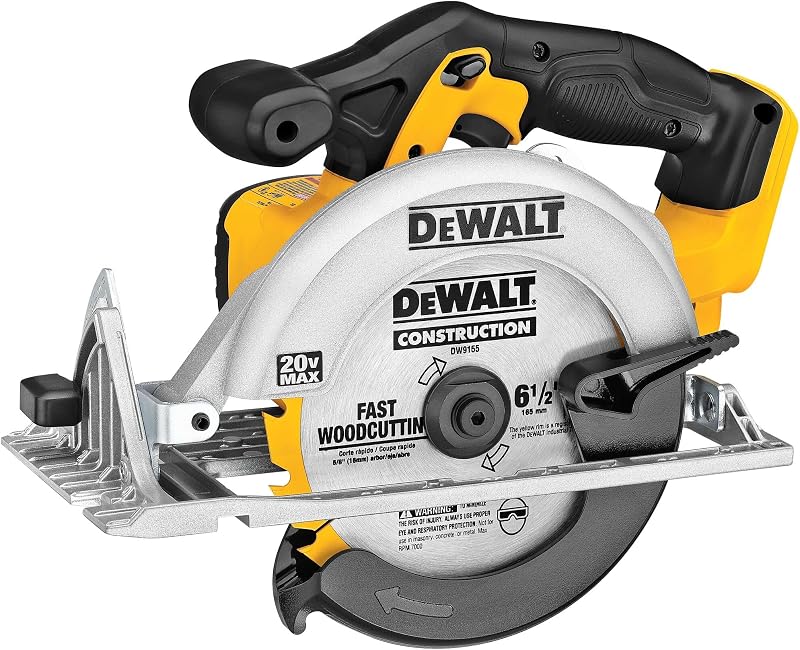
Tool mass and physical dimensions determine how long an operator can cut before muscle fatigue sets in. The DeWalt DCS391 vs DCS573 weight contrast is immediately apparent when lifting both saws bare-tool. The DCS391 weighs 3.16 kg (roughly 7.0 pounds) and measures 15.5 inches long, 8.5 inches wide, and 10.5 inches high. Its lightweight footprint is aided by a high-strength magnesium shoe and an optimized rubber overmolded grip designed for balanced control.
By comparison, the DCS573 weighs 8.2 pounds bare tool with dimensions of 15.25 inches long, 9.75 inches wide, and 8.25 inches high. When outfitted with a multi-cell FLEXVOLT battery to access its maximum power potential, the operating weight increases noticeably. While the extra weight stabilizes the saw during long straight rips on flat sawhorses, it creates arm strain during vertical wall modifications or overhead trimming.
For roofers trimming rafter tails, carpenters installing soffits, or DIYers working on overhead joists, the lower mass of the DCS391 is a distinct asset. The lower rotational mass of a 6-1/2-inch blade also makes quick positioning and stops less strenuous in confined spaces. Those who prioritize a compact footprint over framing depth will find similar lightweight traits explored in our dewalt dcs391 vs makita xsh04z overview.
Edge: DeWalt DCS391 wins on maneuverability and weight, shedding over a pound of bare tool mass and offering superior balance for quick overhead or tight-quarter cutting.
Jobsite Safety, Visibility, and Dust Control
Jobsite productivity relies heavily on integrated safety mechanisms and visibility features that streamline repetitive cuts. The DCS573 includes an electric brake that stops the spinning blade immediately once the trigger is released. This feature prevents accidental workpiece gouging or leg contact when moving between framing cuts. The listing for the DCS391 does not specify an electric brake, meaning the blade coasts to a stop via natural friction.
Visibility and dust management also separate the two tools. The DCS573 features a bright onboard LED that illuminates cut lines in poorly lit basements or shadowed workspaces. Furthermore, the DCS573 comes with an optional dust port compatible with the DEWALT AirLock system or a standard 35 mm dust extractor hose. The DCS391 listing does not specify an onboard LED light or a dust port, relying on standard passive chip ejection.
The DCS573 also incorporates an integrated rafter hook for hanging the saw directly from framing studs or joists, along with a Tool Connect chip pocket designed to accept the DCE042 chip (sold separately) for digital inventory tracking. The DCS391 sticks to core functional elements, offering a spindle lock and keyless blade change mechanism. To see how these safety and convenience features compare against older platform models, check out our dewalt dcs570 vs dcs391 breakdown.
Edge: DeWalt DCS573 excels with its electric brake, bright LED cut line light, rafter hook, Tool Connect compatibility, and dedicated 35 mm dust extraction port.
Framing vs Sheet Goods and Plywood Performance
Deciding between the DeWalt DCS573 or DCS391 for framing comes down to whether your framing tasks involve compound bevels and heavy structural timber. The DCS573 is engineered specifically for framing crews. Its 2-9/16-inch depth at 90 degrees cuts effortlessly through 2x structural lumber and thick headers, while its 2-inch cut depth at 45 degrees handles dimensional valley jacks and rafters without stalling or bottoming out against the lumber.
When choosing between the DeWalt DCS573 or DCS391 for plywood and sheet goods, the lighter weight of the DCS391 makes it remarkably agile. Ripping full 4×8-foot sheets of 1/2-inch or 3/4-inch plywood on sawhorses requires sustained guidance along a straightedge. The DCS391 glides easily across sheet goods without inducing shoulder strain, and its included 18-tooth carbide-tipped blade makes quick work of rough subflooring.
However, the DCS573 ships with a 24-tooth DWA171424 blade that produces cleaner edges in finished plywood veneers with less tear-out than an 18-tooth blade. Additionally, its dust extraction port lets users connect a shop vacuum when cutting sheet goods indoors. Tradespeople who balance framing duties with finish work can find additional perspective on circular saw blade speeds in our dewalt dcs391 vs milwaukee 2730-20 comparison.
Edge: DeWalt DCS573 takes the edge for framing due to superior bevel clearance, while remaining cleaner on sheet goods thanks to its 24-tooth blade and dust collection capability.
Pros and Cons
DeWalt DCS573

Pros
- Deep 2-9/16-inch cut depth at 90 degrees
- Up to 77% more power with FLEXVOLT
- Fast 5,500 RPM brushless motor
- Integrated electric brake and LED worklight
- AirLock compatible dust extraction port
Cons
- Heavier bare tool weight at 8.2 pounds
- Tool Connect chip sold separately
- Larger footprint in cramped workspaces
DeWalt DCS391
Pros
- Lightweight 3.16 kg bare tool frame
- Aggressive 0 to 50 degree bevel capacity
- Durable lightweight magnesium shoe
- Convenient keyless blade change mechanism
Cons
- Shallower 1-5/8-inch depth at 45 degrees
- No electric brake or LED light listed
- No dust extraction port included
Who Should Buy Each One
Choose the DeWalt DCS573 If
- You are framing houses, building decks, or making bevel cuts through dimensional lumber at 45 degrees.
- You already own or plan to use DeWalt FLEXVOLT batteries to unlock up to 77% more motor power.
- You require professional safety and utility features like an electric brake, LED light, and rafter hook.
- You cut indoors or in finished homes where connecting a 35 mm vacuum or AirLock dust port is essential.
Choose the DeWalt DCS391 If
- You want a lightweight, portable saw for standard home repairs, DIY woodworking, and basic crosscuts.
- Your projects primarily involve 90-degree square cuts through two-by lumber and 4×8 sheet goods.
- You frequently work overhead, on scaffolding, or in tight spaces where extra tool weight causes fatigue.
- You need a dependable sidewinder with keyless blade changes that runs on standard 20V MAX batteries.
Final Verdict
For professional contractors, framers, and active remodelers, the question of is DeWalt DCS573 worth it comes down to capability and power. With its full-size 7-1/4-inch blade, 2-9/16-inch cutting depth, 5,500 RPM brushless motor, and up to 77% power increase with FLEXVOLT packs, the DCS573 handles heavy-duty construction lumber without slowing down. Built-in features like the instant electric brake, LED cut line light, rafter hook, and dust port make it the superior choice for high-volume jobsites.
Conversely, for DIY builders and punch-list carpenters wondering is DeWalt DCS391 worth it, the saw remains an attractive, reliable option. Weighing just 3.16 kg (about 7.0 pounds) with a 5,150 RPM motor and durable magnesium shoe, it handles general construction crosscuts and plywood breakdown with ease. While it lacks an electric brake and the deep 45-degree bevel capacity of a 7-1/4-inch saw, its lightweight handling and compact balance make it ideal for casual renovation work.
FAQ
What is the difference in DCS573 vs DCS391 cutting depth?
The DeWalt DCS573 provides a maximum cut depth of 2-9/16 inches at 90 degrees and 2 inches at 45 degrees. The DeWalt DCS391 provides a maximum cut depth of 2-1/8 inches at 90 degrees and 1-5/8 inches at 45 degrees. The DCS573 offers substantially more blade clearance when cutting dimensional lumber on a 45-degree bevel.
Can the DeWalt DCS391 cut through a 2×4 at a 45-degree bevel?
The DeWalt DCS391 has a cut depth of 1-5/8 inches at 45 degrees, while standard dimensional two-by lumber measures 1-1/2 inches thick. While it can cut through a 2×4 at 45 degrees under ideal conditions, the 1/8-inch clearance margin leaves almost no room for warped, wet, or cupped boards, making blade binding more likely than with the DCS573.
Can you use standard 20V MAX batteries on the DeWalt DCS573?
Yes, the DeWalt DCS573 is compatible with all DeWalt 20V MAX and FLEXVOLT batteries. It functions normally on standard 20V MAX batteries like the DCB205, but pairing it with a DCB606 FLEXVOLT battery activates the FLEXVOLT Advantage technology to deliver up to 77% more power.
Does the DeWalt DCS391 feature an electric brake or LED light?
The manufacturer listing for the DeWalt DCS391 does not specify an electric brake or an integrated LED worklight. In contrast, the DeWalt DCS573 includes an electric brake that halts the blade upon trigger release and a bright LED that illuminates the cut line.
Which saw is better: DeWalt DCS573 or DCS391 for framing?
The DeWalt DCS573 is far better suited for framing. Its 7-1/4-inch blade provides a 2-inch cut depth at 45 degrees to clear dimensional joists and rafters on compound angles, supported by a 5,500 RPM brushless motor and an integrated rafter hook for hanging the tool between cuts.
Which saw is better: DeWalt DCS573 or DCS391 for plywood?
Both saws rip plywood effectively, but they suit different cutting priorities. The DeWalt DCS391 is lighter at 3.16 kg, reducing fatigue when guiding the saw across full 4×8-foot sheets. The DeWalt DCS573 includes a 24-tooth blade for smoother veneer edges, spins faster at 5,500 RPM, and features a dust port to capture sawdust during indoor panel cutting.
What blades come included with each saw?
The DeWalt DCS573 includes a 7-1/4-inch 24-tooth DWA171424 saw blade, a blade change wrench, and a dust port. The DeWalt DCS391 includes a 6-1/2-inch 18-tooth carbide-tipped blade and features a keyless blade change system. Neither tool-only package includes a battery or charger.


